
Your website exists. That's a start. But if nobody finds it on Google, it's basically an expensive business card sitting in a drawer.
SEO is the difference between a website that generates leads and one that collects dust. Not because it's magic. Because search engines follow rules, and when you play by those rules, they send you free, qualified traffic every single month.
Start with keywords (yes, really)
Keywords are what people type into Google when they need something. "Web design Zadar." "Best CRM for small business." "How to fix a leaky faucet." Every one of those searches is a person with intent. Your job is to figure out which searches your potential customers are making and show up for them.
Here's how to find the right ones:
- Use actual tools. Google Keyword Planner is free. SEMrush and Ahrefs give you deeper data on search volume, competition, and related terms.
- Think like your customer. Don't optimize for industry jargon nobody searches for. A dentist doesn't need to rank for "periodontal disease management." They need "gum treatment near me."
- Go long-tail. Shorter keywords have insane competition. "Web design" is a war. "Custom web design for restaurants in Croatia" is a fight you can actually win.
Keywords aren't a one-time exercise. Search behavior changes. New competitors appear. Revisit your keyword strategy every quarter at minimum. For a deeper dive, check out our guide on what keywords are and how to use them.
On-page optimization: The stuff Google actually reads
On-page SEO means making sure every page on your site tells Google exactly what it's about. This isn't complicated, but most sites still get it wrong.
Title tags. Every page needs a unique title tag under 60 characters that includes your target keyword. Not "Home" or "Services." Something descriptive. "Custom Website Design for Small Business | Version2" tells Google and users what the page is about.
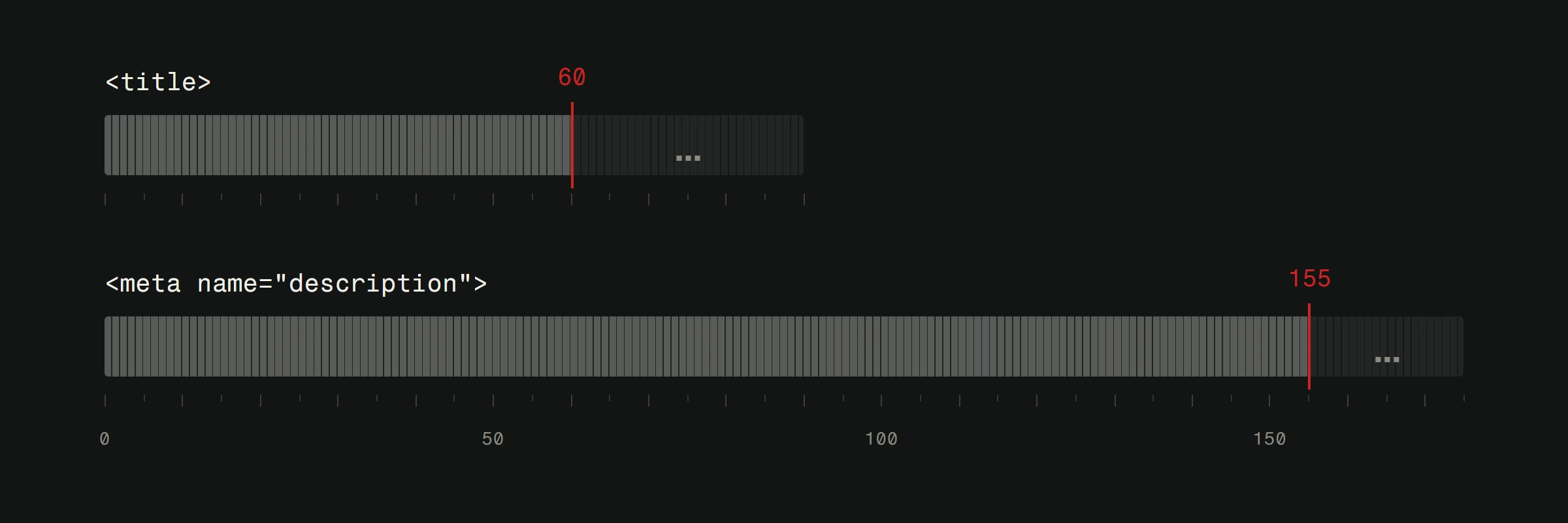
Meta descriptions. The short text that shows up in search results below your title. Keep it under 155 characters, include your keyword, and make it compelling enough to click. Think of it as ad copy you don't pay for.
Header structure. Use H1 for your main title (one per page), H2 for sections, H3 for subsections. This hierarchy helps Google understand your content structure and helps users scan the page.
URL structure. /services/web-design/ is good. /page?id=7382&cat=3 is bad. Clean, readable URLs with keywords matter.
Image alt text. Google can't see images. Alt text tells it what's there. "Screenshot of mobile responsive website on iPhone" beats "image1.jpg" every time.
Internal links. Link related pages together. If you mention SEO on your services page, link to your blog posts about SEO. This helps Google understand your site's structure and keeps visitors exploring. We cover this more in our SEO checklist guide.
Link building: Getting other sites to vouch for you
Think of backlinks as referrals. When a reputable site links to yours, Google treats it like a vote of confidence. More quality votes, higher rankings.
But emphasis on "quality." One link from a respected industry publication is worth more than 50 links from random directories nobody visits.
How to earn good backlinks:
- Create content worth linking to. Original research, useful guides, tools, and data-driven posts attract links naturally.
- Guest post on relevant sites. Write for publications your audience reads. The backlink is a bonus on top of the exposure.
- Build relationships. Connect with people in your industry. Share their work. They'll share yours. Backlinks often follow genuine professional relationships.
- Avoid link schemes. Buying links, link farms, and reciprocal linking arrangements can get your site penalized. Google is smart about this.
Want to understand backlinks better? Our backlinks explainer covers the fundamentals.
Mobile optimization isn't optional
Google uses mobile-first indexing. That means it looks at the mobile version of your site first when deciding rankings. If your site is a mess on phones, your rankings will suffer no matter how good the desktop version is.
What mobile optimization actually means:
- Responsive design. Your site should adapt to any screen size without horizontal scrolling or tiny unreadable text.
- Fast load times. Mobile users are impatient. If your site takes more than 3 seconds to load, over half your visitors leave before they see anything. Compress images, minimize code, use a CDN. Our guide on website speed optimization has the technical details.
- Tap-friendly navigation. Buttons and links need enough spacing that people can tap them with a thumb without accidentally hitting the wrong thing.
- No intrusive popups. Google penalizes sites that show full-screen popups on mobile. That email signup modal covering the entire screen? It's hurting your rankings.
Measure what matters
SEO without measurement is just guessing. You need to know what's working, what's not, and where to focus next.
Google Search Console is free and essential. It shows you which queries bring people to your site, your average position for each keyword, click-through rates, and any technical issues Google found while crawling your site.
Google Analytics tells you what visitors do after they arrive. Which pages they visit, how long they stay, where they drop off, and whether they convert.
Third-party tools like SEMrush or Ahrefs track your keyword rankings over time, monitor your backlink profile, and spy on what competitors are doing.
The metrics that actually matter:
- Organic traffic. Is it going up month over month?
- Keyword rankings. Are your target keywords moving in the right direction?
- Click-through rate. Are people clicking your results or scrolling past?
- Bounce rate. Are visitors leaving immediately? That signals a mismatch between what they searched for and what they found.
- Conversions. Traffic is meaningless if nobody contacts you, buys something, or takes the action you want.
Check these numbers monthly. Look for trends, not daily fluctuations. SEO is a long game. Three months of consistent effort usually shows real movement. Six months shows compounding results. Tracking these metrics month over month is exactly what guides the optimizations that push a site higher in search results.
The honest truth about SEO
SEO is not a one-time project. It's an ongoing practice. Google updates its algorithm hundreds of times a year. Competitors are publishing content and building links too. The sites that rank well are the ones that keep showing up and keep improving.
But here's the upside: unlike paid ads, SEO traffic doesn't stop when you stop paying. The blog post you publish today can bring traffic for years. The backlinks you build compound over time. The technical improvements you make benefit every page on your site.
It's not fast. It's not glamorous. But it works.
Want to know where your site stands right now? Our free website analysis shows you exactly what's working, what's broken, and what to fix first.