AI

Where could AI help with your work?

AI can help with finding information, preparing work and carrying out tasks that repeat. We start with one process, the information it depends on and the person who checks the result.

What we build

Four ways we would build it.

Each one starts from a task you already do. Which one fits depends on the job and on who checks the result.

Chatbot, assistant, agent

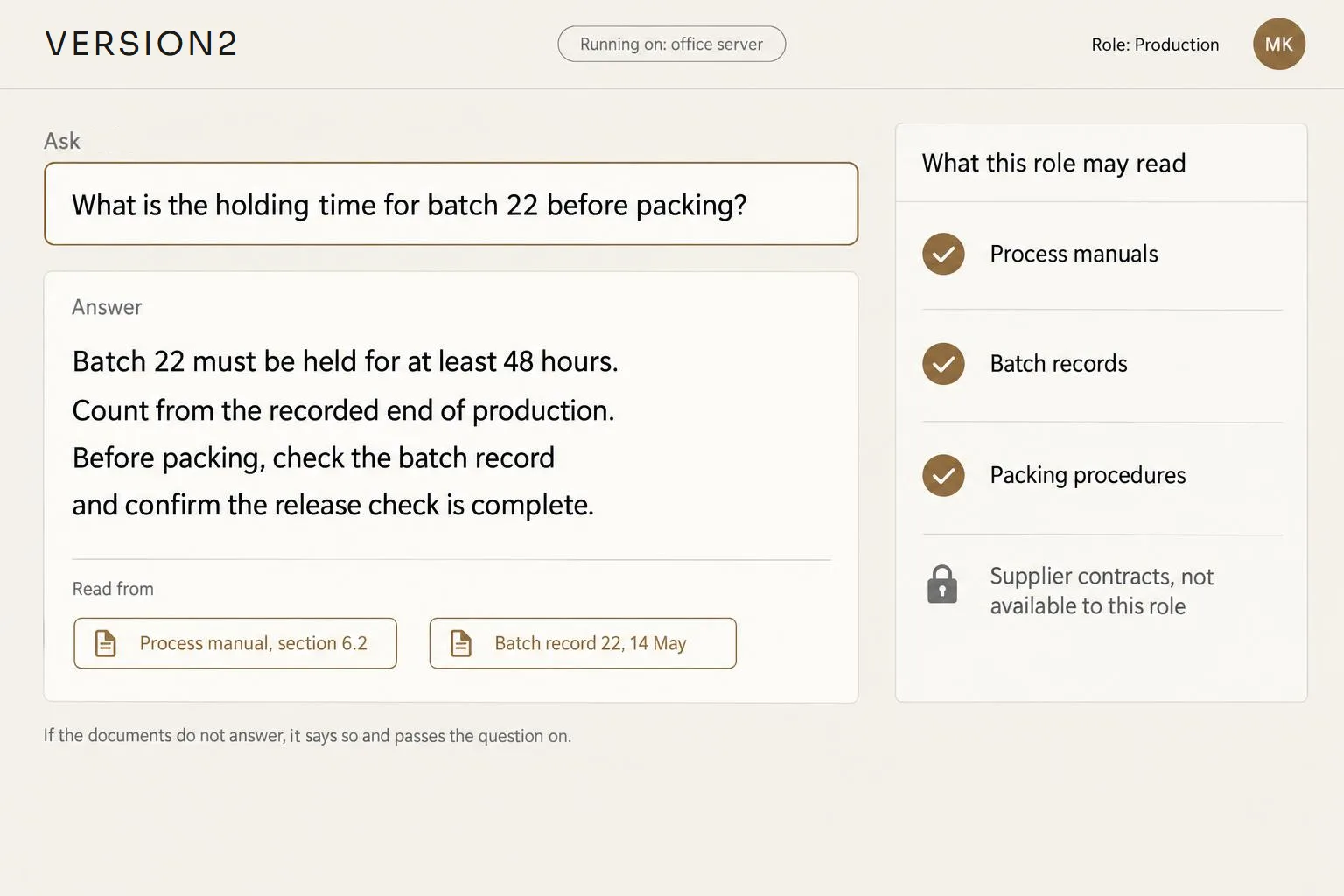
A chatbot, an assistant and an agent do different jobs.

These are working distinctions for choosing what to build. What decides it is the job itself and who checks the result.

Chatbot

What it does
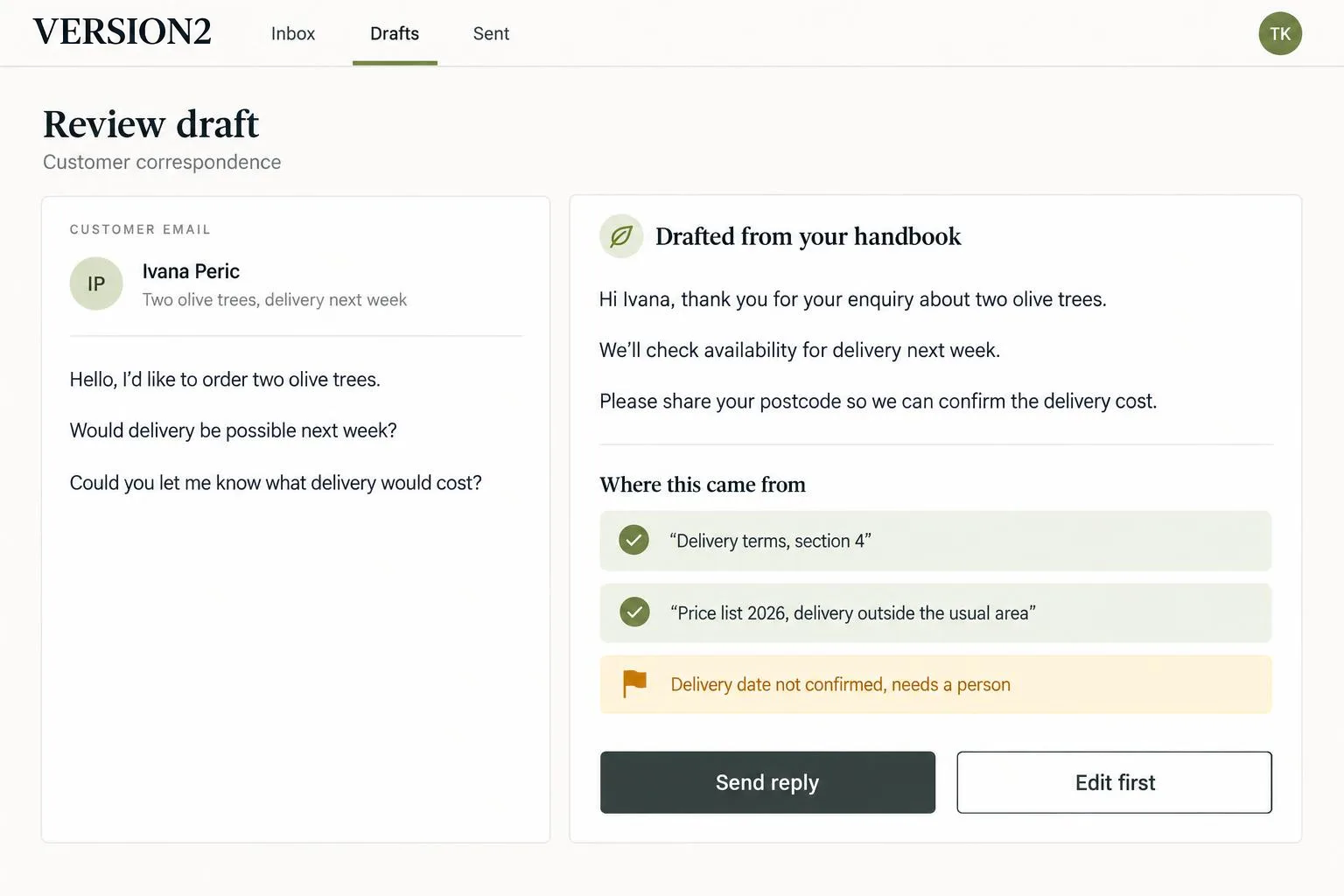
Answers questions in a conversation.
Best for
Questions that come up again and again, answered from information someone keeps up to date.
Not for
Tasks that need reliable actions across several systems.
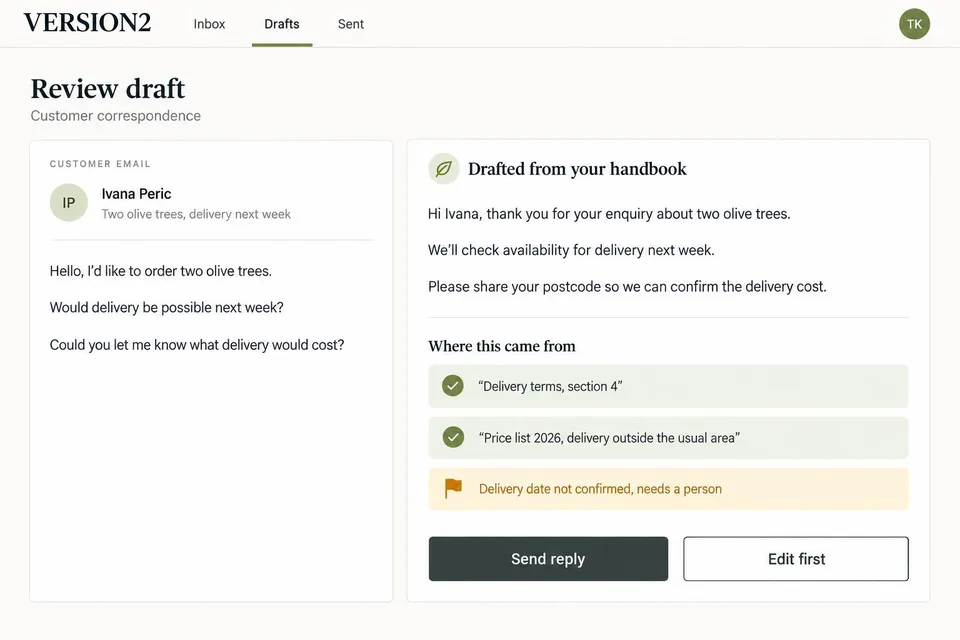
Assistant

What it does
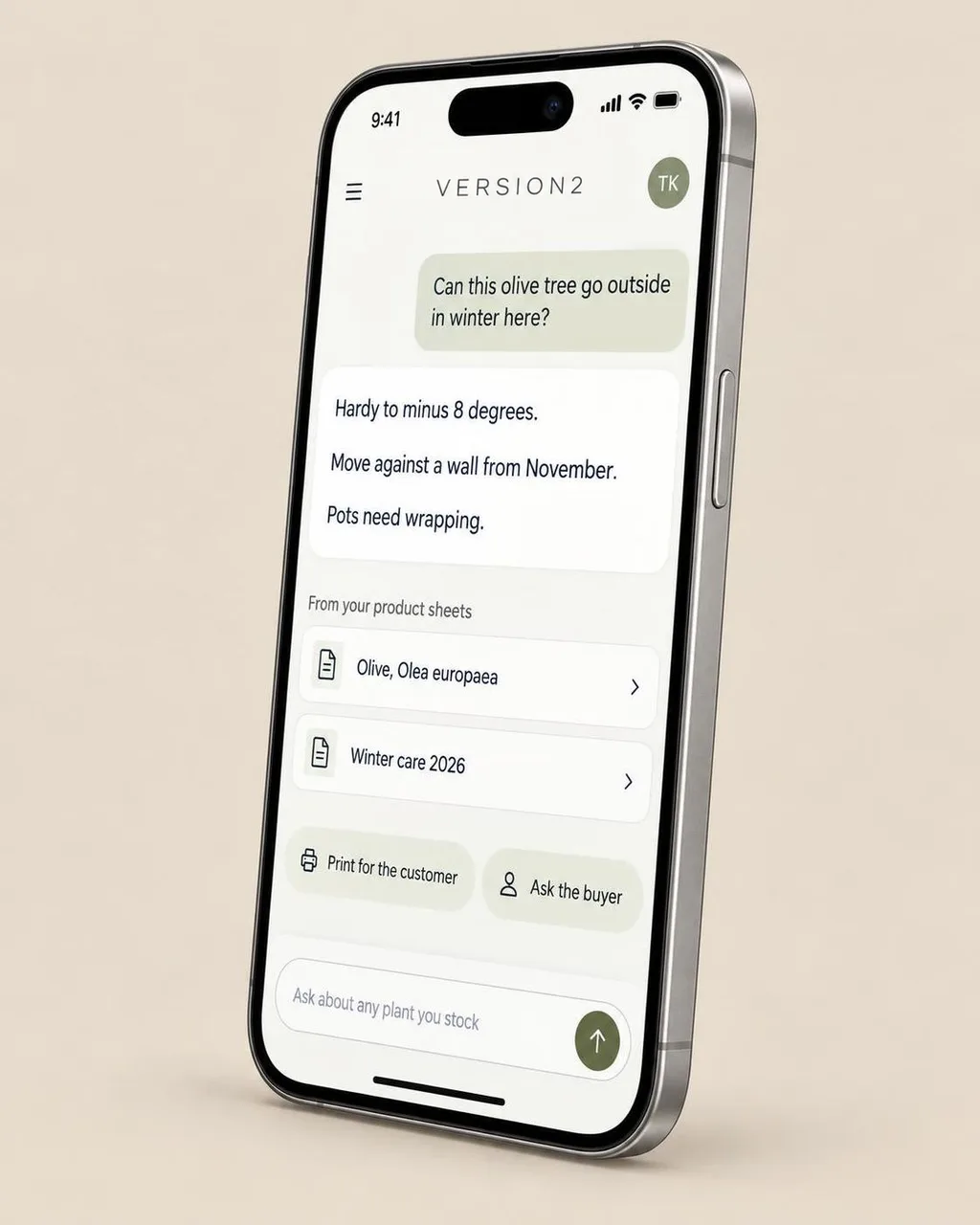
Helps a person find information, prepare work or use approved tools.
Best for
Work that benefits from a review before anyone uses it.
Not for
Situations where every answer has to be right without a check.

Agent

What it does
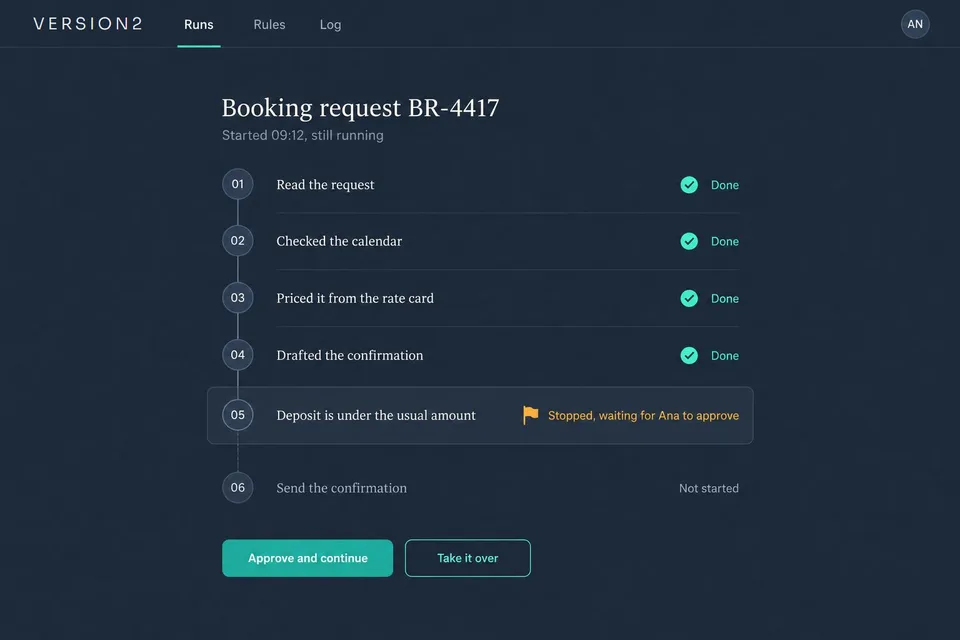
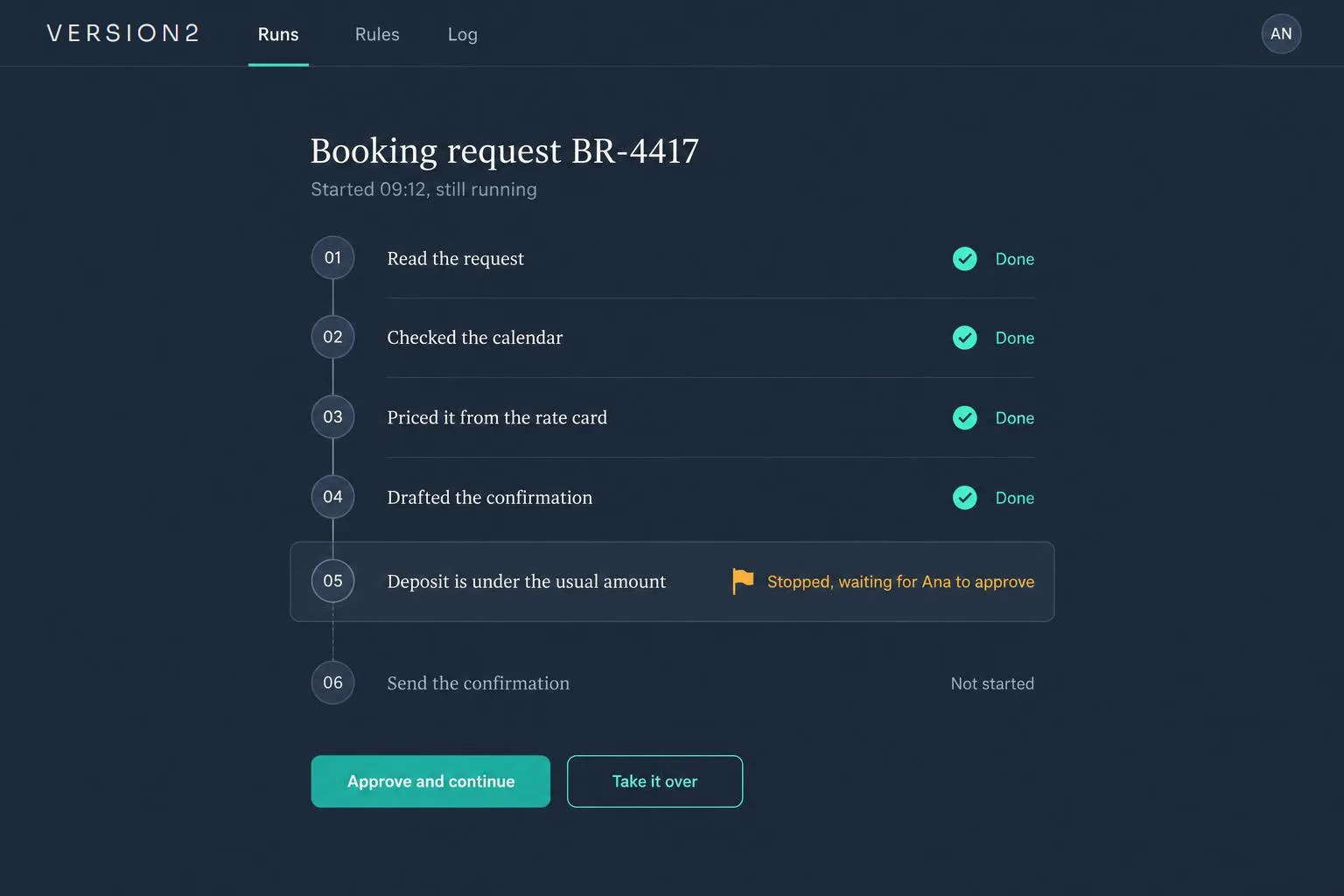
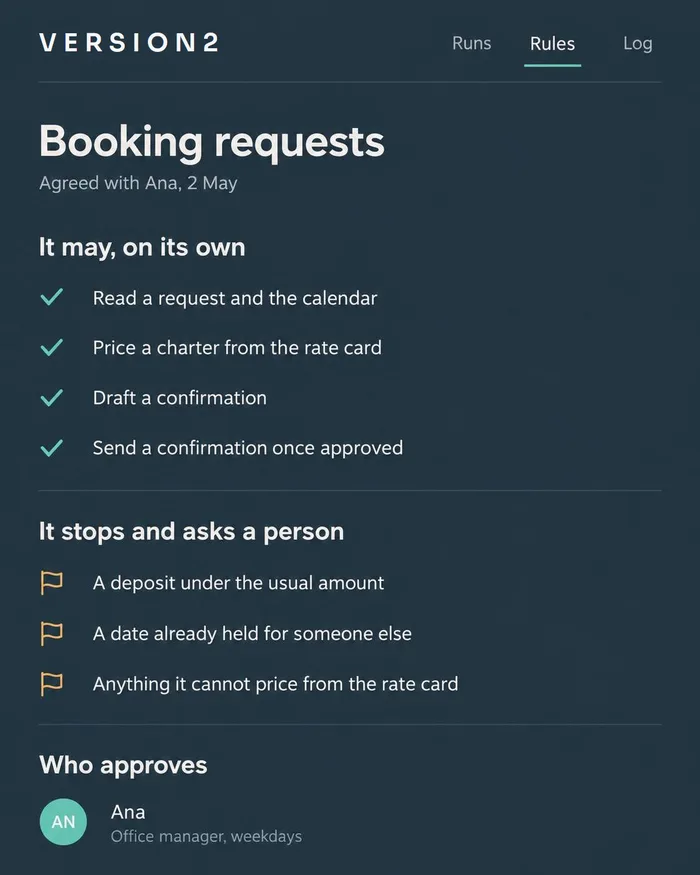
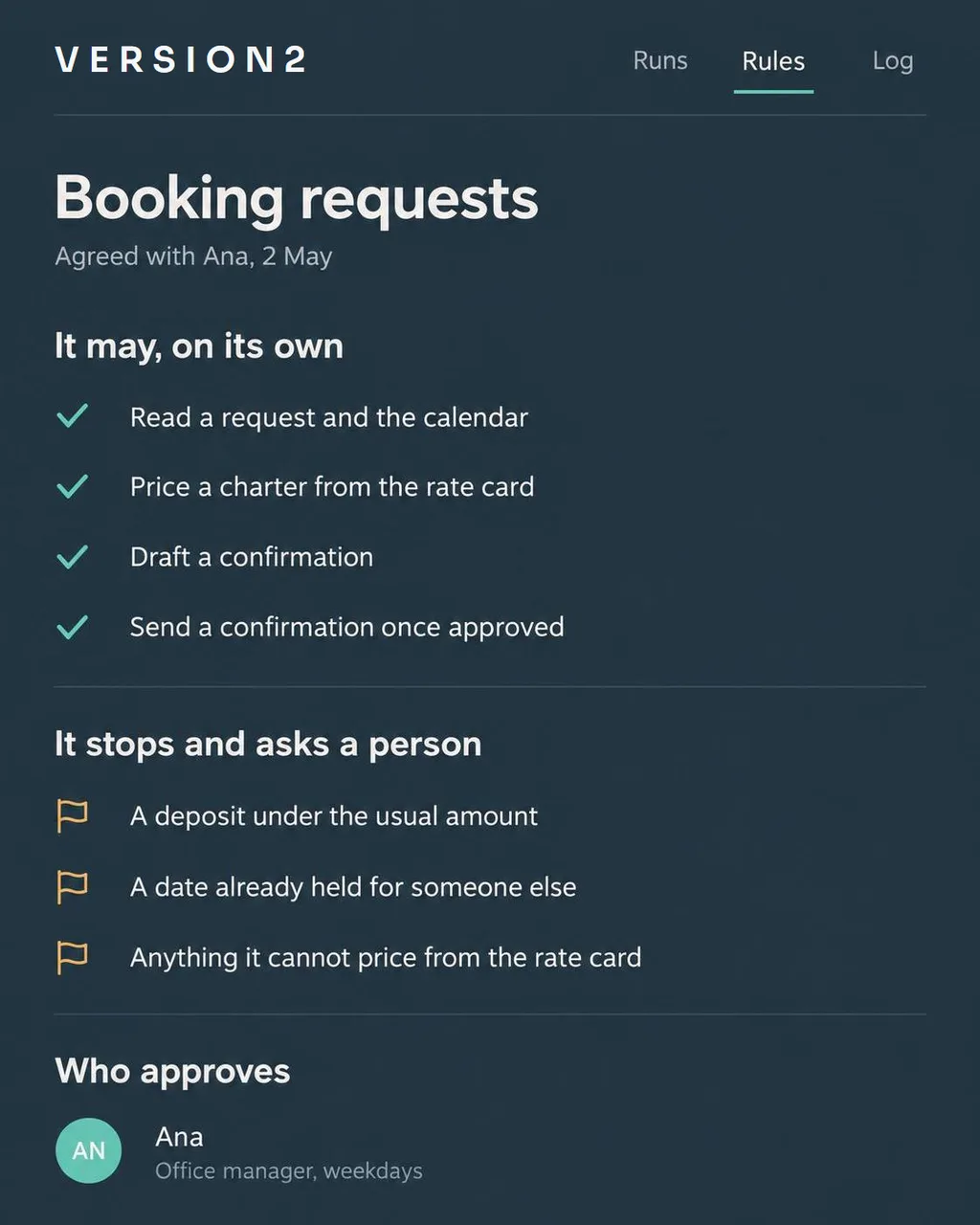
Runs an agreed sequence of steps and passes the exceptions to a person.
Best for
A repeatable task with defined permissions and a result you can check.
Not for
Broad authority over unclear processes, or decisions that can’t be reversed.

Limits

What stays a problem after AI is added.

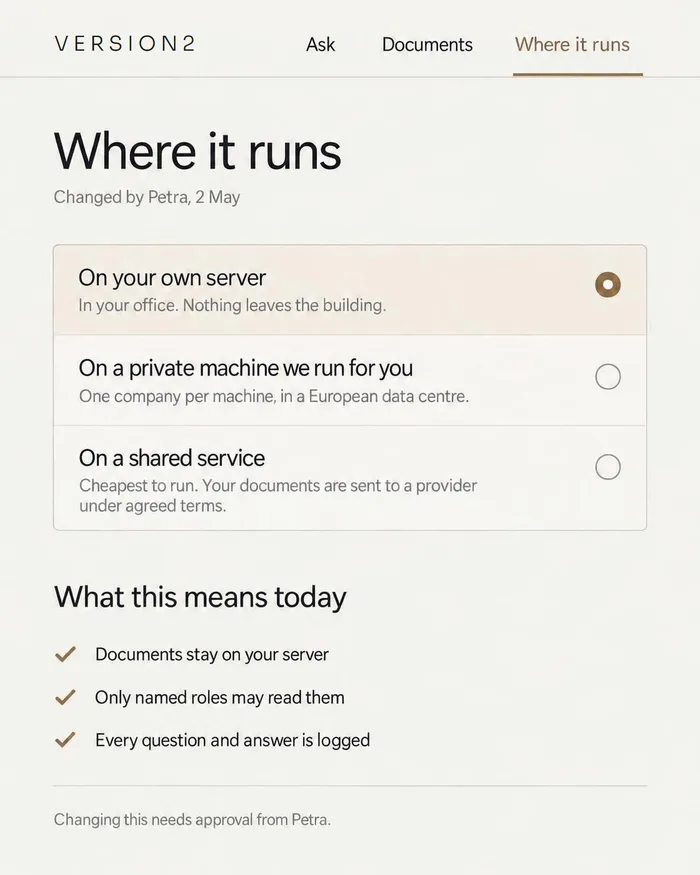
We look at these before recommending a build. When one of them isn’t settled, that’s where the work starts, and often it’s work your team can do without us.

  1. 01

    Information nobody has written down.

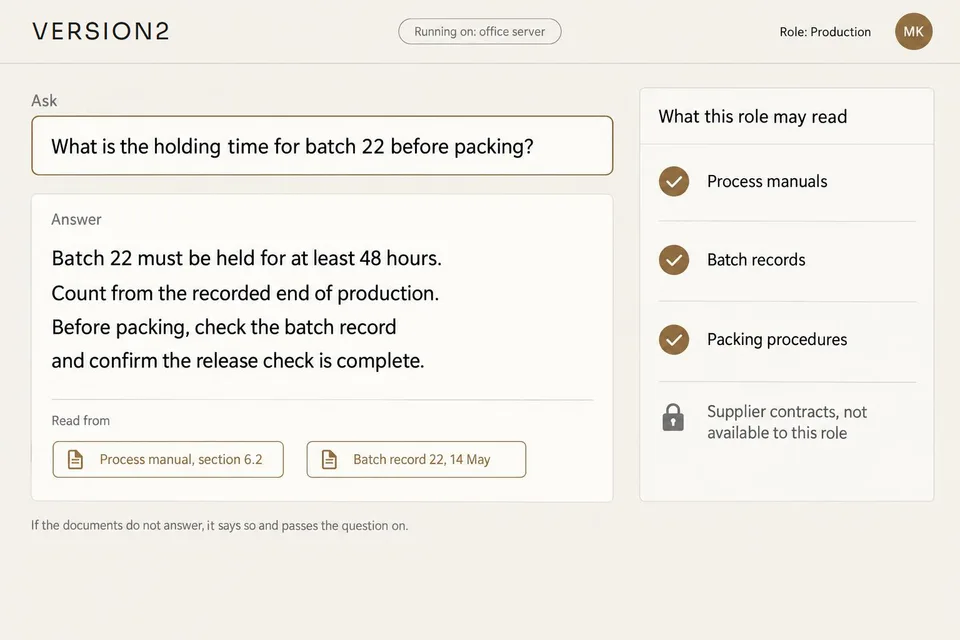
    An assistant can only work from what it can read. When the answer lives in someone’s head, the system has to say so and pass the question on, and that’s how we build it.

  2. 02

    Permissions nobody has settled.

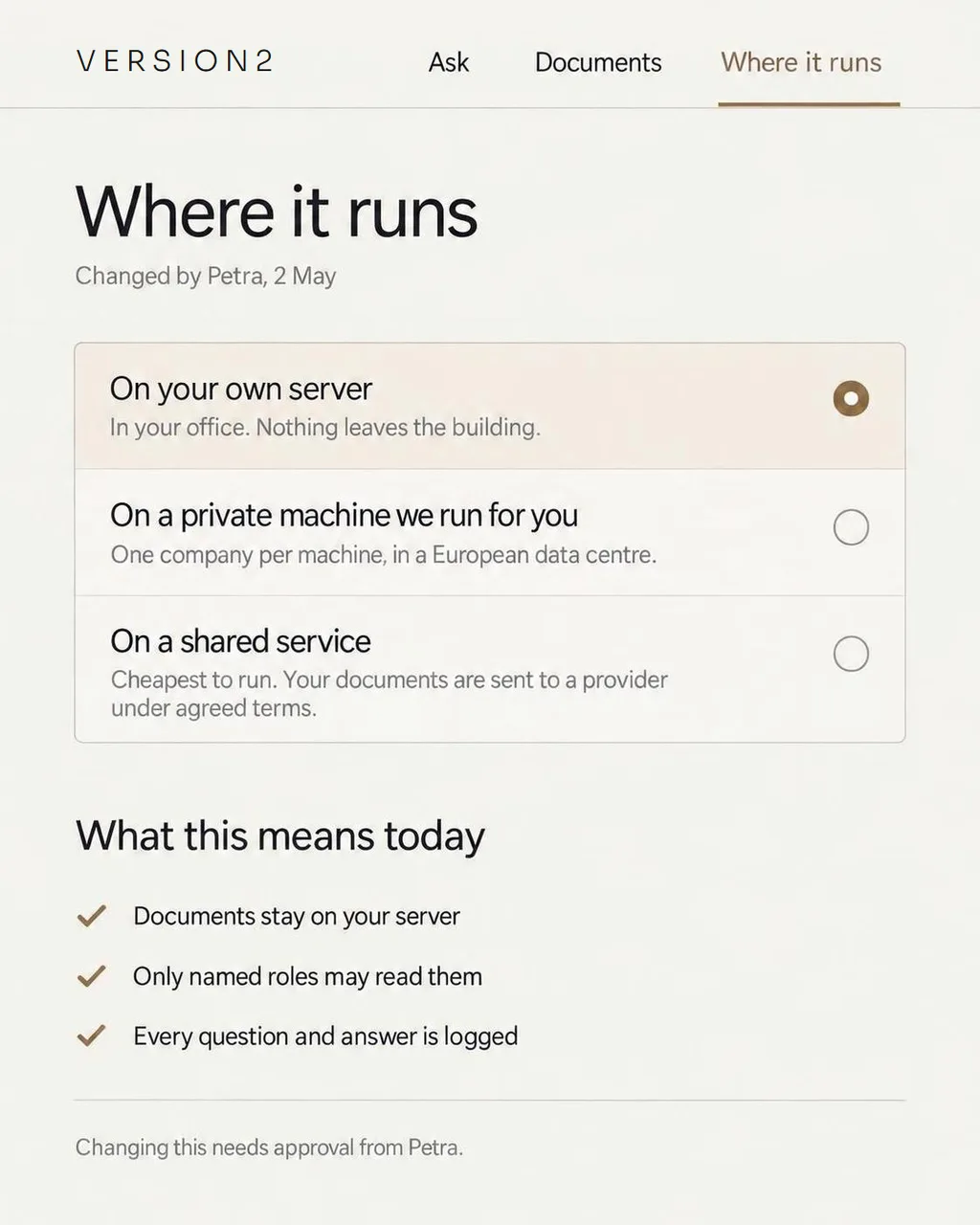
    Who may see a margin, approve a refund or change a booking has to be decided first. We set those rules in the system’s access, so it can’t show what it never received.

  3. 03

    A process that runs differently every time.

    A task without clear steps is hard to hand over to anyone, software included. Writing the steps down is often the most useful part of the first week.

  4. 04

    A job simpler automation can do.

    A rule in your existing software, a form or a scheduled export sometimes does the job for less. We’ll say so before we quote an AI build.

Responsibility

A person on your side decides what a correct result looks like.

Your side

Your process owner

  1. 01Decides what a correct result looks like.
  2. 02Decides which actions need approval, and who gives it.
  3. 03Keeps the source information current.

Both sides are written into the scope before the build starts.

Our side

Version2

  1. 01Defines what the system may read and do.
  2. 02Writes the test cases with you and runs them before anyone relies on the system.
  3. 03Decides how every exception reaches a person.

Where to start

Begin with one task.

A readiness check shows you the groundwork. A discovery looks at the task in detail and ends in a written verdict.

01

AI-readiness check

Free, and the result is yours without an email

Ten statements about one task in your business, each answered with yes, partly or not yet. Your answers show what’s already in place and what to settle first. Here are the first four.

  1. 01We can name one task that comes back every week, takes real hours and follows roughly the same steps each time.
  2. 02How that task is done is written down, or one person could walk someone new through it from start to finish.
  3. 03The information that task needs lives in software, such as a CRM, a shared drive, email or a database, rather than on paper or in someone’s head.
  4. 04We can export that information or reach it through an API, and we’re allowed to use it this way.
Take the readiness check
02

AI Discovery

A fixed price and a fixed week

Interviews with your team, a check of your data and a written verdict on whether to build. The fee is credited against any AI build that follows.

The written verdict
01The task
What we looked at, and who does it today.
02The data
What a system could read, and what’s missing.
03The verdict
Build, run a pilot first, or settle the groundwork.
04The scope
What a first build would do, with its price and window.
05Still open
The questions that need an answer from your side.
Private AI starts here
Version2 AssistantAI assistant

It can

  • Answer from our published pages and articles
  • Prepare a quote you can open in the calculator
  • Book a free 10-minute call
  • Look up a quote, an order or a booking by its reference

It leaves to people

  • Taking a payment or placing an order
  • Signing anything
  • Changing or cancelling a booking
  • Acting inside your systems

Our own build

Our website has an assistant we built ourselves.

It answers from what we’ve published, turns a price question into a quote in the calculator and can book a free 10-minute call. It says it’s an AI, and someone from the team can take over the conversation.

Works with the tools you have

Integrations and agents work inside the software your team already uses, so questions, approvals and records stay where people look for them.

  • Slack
  • Microsoft Teams
  • Google Calendar
  • Notion
  • Jira
  • Airtable
  • HubSpot
  • Zoho
  • Shopify
  • WooCommerce
  • Stripe
  • Zapier

Let’s talk

Tell us about the task you have in mind.

One task is enough to start. We’ll tell you whether it’s ready for AI and what the first step would be.

Email
office@version2.hr
Phone
+385 99 561 7706
ContactWhatsApp