AI in Digital Marketing: What Works and What Doesn't

AI isn't magic. It's a set of tools that do specific things well. Here's a clear breakdown of what AI actually does in digital marketing and how to apply it.

There's a gap between what people think AI does in marketing and what it actually does. On one side, you've got the hype machine promising fully automated businesses. On the other, skeptics who think it's just a fancier autocomplete. The truth is somewhere in the middle, and it's more useful than either extreme suggests.

Let's break down the specific roles AI plays in digital marketing today. Not the future. Not the theoretical. What's working right now.

Chatbots: Your Website's 24/7 Employee

This is the most visible application and probably the one that delivers the fastest ROI for small businesses.

An AI chatbot on your website does something no contact form can: it responds instantly. When someone visits your site at 10 PM and wants to know if you offer a specific service, a chatbot gives them an answer in seconds. A contact form gives them anxiety about whether anyone will reply.

Modern chatbots powered by models like GPT-5 aren't the rigid decision-tree tools from a few years ago. They understand natural language with remarkable nuance. They handle complex follow-up questions. They remember context across long conversations. And when they hit something they can't handle, they escalate to a human.

What this looks like in practice: A dental clinic's website chatbot answers questions about procedures, insurance coverage, and available appointment times. It books consultations directly. The clinic's front desk staff handles fewer repetitive calls and focuses on in-person patients.

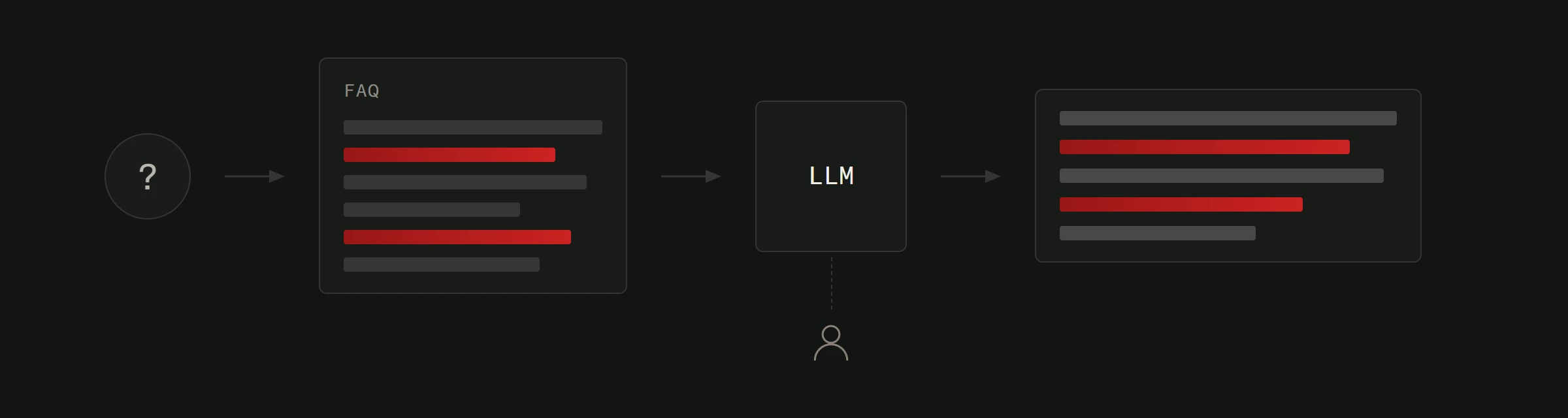
The key is training it properly. A chatbot is only as good as the data behind it. Feed it your actual FAQ, your pricing structure, your service descriptions. Test it extensively before putting it in front of customers.

If you're curious about the broader picture, our post on how AI is changing digital marketing covers the industry-wide shifts happening right now.

Content Generation: The First Draft Machine

AI doesn't write your marketing content for you. It writes the first version that you then turn into something worth publishing.

That distinction matters. Raw AI output is recognizable. It's technically correct but emotionally flat. It uses the same sentence structures over and over. It hedges everything. It sounds like everyone else's AI output.

But as a starting point? It's incredibly valuable.

What AI handles well:

  • Generating five different angles for a blog post so you can pick the best one
  • Writing product descriptions for 50 items when the alternative is doing it manually
  • Creating email subject line variations for A/B testing
  • Drafting social media posts that you then edit for voice and personality
  • Repurposing long content into shorter formats

What it doesn't handle well:

  • Original thought leadership that reflects your actual expertise
  • Humor, sarcasm, and cultural references that require real understanding
  • Case studies that need specific details from real projects
  • Any content where accuracy is critical (legal, medical, financial)

For a hands-on guide to using ChatGPT specifically for content and business tasks, see our ChatGPT practical playbook.

Customer Understanding: Patterns You'd Never See

This is where AI earns its keep in ways that are invisible to the end user but massively valuable to the business.

You have data. Website analytics, purchase history, email engagement rates, customer support tickets. Humans can look at spreadsheets. AI can find patterns across thousands of data points simultaneously.

Practical applications:

Audience segmentation. Instead of manually creating customer groups, AI analyzes behavior and creates segments based on actual patterns. People who buy seasonally. People who research extensively before purchasing. People who respond to discounts versus people who respond to new arrivals.

Predictive behavior. AI can flag customers likely to churn before they actually leave. It identifies buying patterns that suggest someone is ready for an upsell. It predicts which leads are most likely to convert so your sales team focuses their energy wisely.

Content performance analysis. Which blog posts actually lead to conversions? Which email sequences produce the best results? AI connects the dots across touchpoints that would take a human analyst weeks to map manually.

Personalization: The Right Message to the Right Person

Personalization isn't new. But doing it at scale without a team of 20 people is new. That's the AI contribution.

Before AI, personalization meant putting someone's first name in an email. Now it means showing different homepage content to returning visitors versus first-timers. Recommending products based on browsing history. Adjusting email send times to when each individual subscriber is most likely to open.

A real example: An online store selling outdoor gear has thousands of products. AI tracks what each visitor browses, compares it to similar customers' behavior, and surfaces the products most likely to interest them. The visitor sees a homepage that feels curated for them. The business sees higher conversion rates.

This works on websites, in email, in product recommendations, and in ad targeting. The underlying principle is the same: use data to make every interaction more relevant.

Automation: Doing the Boring Stuff Automatically

This isn't glamorous, but it might be the most immediately useful application for most businesses.

Email workflows. Someone downloads a guide from your site. AI triggers a nurture sequence. If they open email #2 but not #3, it adjusts the next message. If they visit your pricing page, it sends a different follow-up than if they visit your blog. All of this runs in the background.

Lead scoring. Every interaction a potential customer has with your brand gets a point value. Visited the pricing page? Points. Opened three emails? Points. Clicked a case study? Points. When someone crosses a threshold, your sales team gets notified. No manual tracking required.

Campaign optimization. AI tests ad variations, adjusts bidding, shifts budget toward top performers, and pauses underperformers. A/B testing that used to require manual monitoring now runs itself.

These aren't theoretical features. They're built into platforms that businesses of any size can access right now.

What AI Cannot Replace

Let's be direct about this.

Strategic thinking. AI processes data. It doesn't set business direction. Deciding which market to enter, what brand position to take, or when to pivot requires human judgment, industry knowledge, and risk tolerance that no algorithm provides.

Creative direction. AI generates variations. It doesn't conceive the original idea that makes a campaign memorable. The most effective marketing campaigns in history came from human insight about culture, emotions, and timing.

Relationship building. Chatbots handle transactions. Humans build relationships. The client who stays with you for ten years doesn't do it because your chatbot was friendly. They do it because your team understood their business.

Ethical judgment. Just because AI can target someone with hyper-personalized advertising doesn't mean you should. Privacy boundaries, taste, and ethical considerations require human decision-making.

The Privacy Dimension

Every AI marketing tool runs on data. More data usually means better results. But "more data" and "ethical data collection" are sometimes at odds.

GDPR exists for good reasons. Collect what you need. Get explicit consent. Be transparent about usage. Delete data when you no longer need it. These aren't just legal requirements. They're trust-building practices.

The EU AI Act adds another layer. From August 2026, businesses using AI chatbots must inform users they're talking to a machine, and AI-generated content has specific transparency requirements. For most small businesses, compliance is straightforward, but ignoring it is not an option.

A timeline of Regulation (EU) 2024/1689 with five marks spaced by real elapsed months: 2024-08-01 entry into force, 2025-02-02 for Articles 4 and 5, 2025-08-02 for Article 53, 2026-08-02 for Article 50 highlighted in crimson, and 2027-08-02 for Article 6(1).
The August 2026 date the post names is Article 50, and it arrives with the bulk of the Regulation rather than on its own. Two duties are already in force, which is the part most planning misses.View full-size image

The companies that treat customer data with respect are the ones that keep customers long-term. AI makes it easy to collect everything. Wisdom is knowing what not to collect.

Where to Start If You're New to This

Don't try to implement everything at once. That's a recipe for wasted money and half-finished projects.

Start here: Add a chatbot to your website that handles your top five customer questions. This gives you a quick win, teaches you how AI tools work, and delivers immediate value to your visitors.

Then: Use AI to assist with content creation. Generate first drafts for blog posts and emails. Edit them. Publish them. Measure results.

Then: Implement email automation with basic personalization. Segment your list. Create triggered sequences. Let AI optimize send times.

Then: Explore predictive analytics and advanced personalization as your data grows.

Each step builds on the last. Each one teaches you something about how AI works in your specific context.


Want to bring AI into your marketing without the trial-and-error? Start with our beginner's guide to ChatGPT or see how Version2 builds AI integration into websites and business workflows.

Share this article

Related articles

ContactWhatsApp