Google's algorithm uses hundreds of ranking factors. But when SEO professionals are asked which factors matter most, the answer almost always includes backlinks. They've been important since Google launched, and despite years of algorithm updates, they still are.
Yet most business owners either ignore backlinks entirely or go about getting them in ways that hurt more than help. Let's fix that.
What is a backlink?
A backlink is a link from someone else's website to yours. That's it.
When a tech blog writes an article and links to your product page as an example, that's a backlink. When a local news site mentions your business and links to your homepage, that's a backlink. When a directory listing includes your URL, that's a backlink too (though a less valuable one).
The concept is simple. The impact is not.
Why Google cares about backlinks
Think about how recommendations work in the real world. If one person says a restaurant is good, maybe. If fifty people say it's good, you'll probably try it. If a famous food critic says it's good, you'll definitely try it.
Backlinks work the same way for Google. Each link from another site is a signal that your content is worth referencing. More links from more reputable sources means Google trusts your site more. Higher trust means higher rankings. Higher rankings mean more traffic.
This is the foundation of Google's original algorithm. The idea that links are votes of confidence. The algorithm has gotten more sophisticated since then, but the core principle remains.
Not all backlinks are equal
This is the part most people get wrong. They focus on quantity. "I need more backlinks." But ten links from respected, relevant websites are worth more than a thousand links from random, low-quality sites.
Here's what makes a backlink valuable:
Authority of the linking site. A link from a major news publication or a well-known industry site carries serious weight. A link from a brand-new blog with zero traffic carries almost none. This is directly tied to the linking site's domain rating.
Relevance. A link from a site in your industry is worth more than a link from an unrelated site. If you sell kitchen equipment and a cooking blog links to you, Google sees that as a relevant endorsement. If a random tech forum links to you, less so.
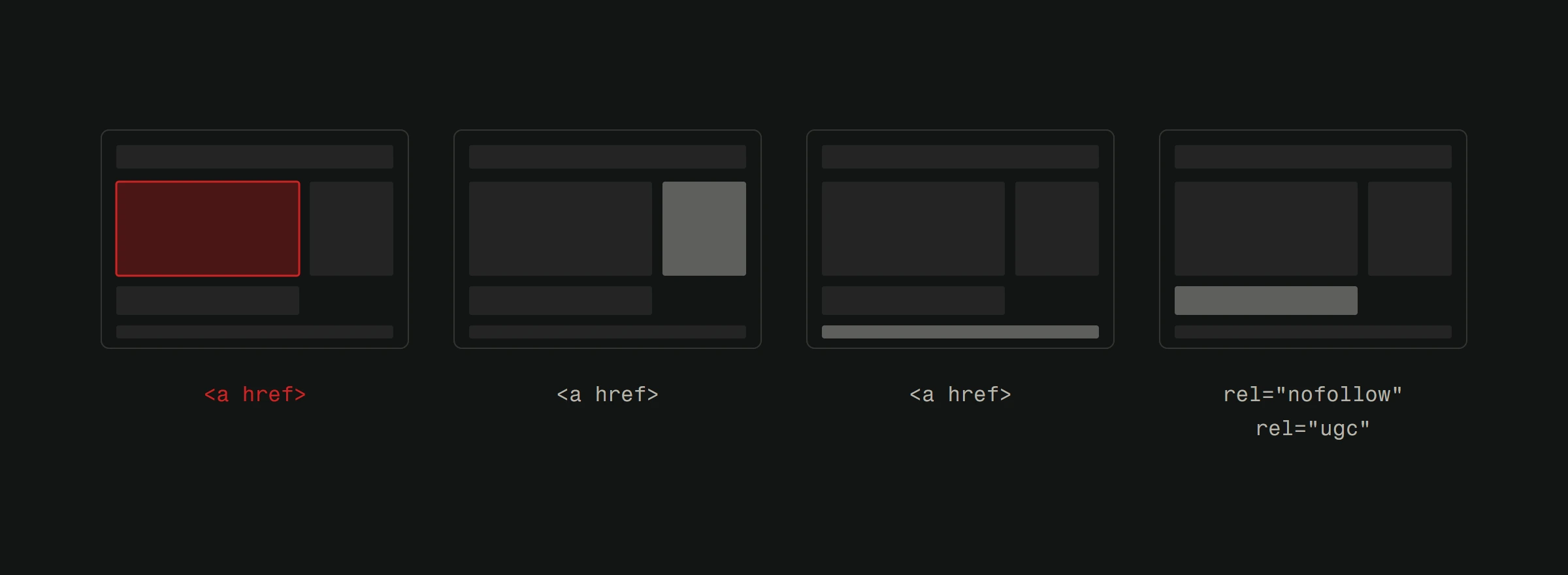
Link placement. A link within the main content of a page is worth more than a link in the footer, sidebar, or comments section. Google can tell the difference.
Anchor text. The clickable text of the link matters. Natural, descriptive anchor text helps Google understand what your page is about. But if every backlink uses the exact same keyword-stuffed anchor text, it looks artificial and can trigger penalties.
Dofollow vs. nofollow. Dofollow links pass ranking value. Nofollow links (marked with a rel="nofollow" attribute) tell Google not to count them as endorsements. Most editorial links are dofollow. Social media links and comment links are typically nofollow. Both have value, but dofollow links directly impact rankings.
How backlinks affect your rankings
The effects are concrete and measurable.
Higher search positions. Pages with strong backlink profiles consistently outrank pages without them, all other factors being equal. If your content is good but lacks backlinks, it will struggle to compete against similar content that has them.
Faster indexing. Google discovers new pages by crawling links. When reputable sites link to your new content, Google finds and indexes it faster. Without backlinks, new pages can sit in limbo for weeks.
Increased referral traffic. Beyond SEO value, backlinks from popular sites send actual visitors your way. A mention on a high-traffic blog can drive significant direct traffic.
Domain authority growth. Over time, a healthy backlink profile increases your overall domain authority. This makes it easier to rank for new keywords because Google already trusts your site.
How to build backlinks the right way
There are no shortcuts here. The strategies that work require effort. But they work consistently and safely.
Create content worth linking to
This is the foundation. Nobody links to a generic services page. People link to useful, original, well-researched content.
Create guides that comprehensively cover a topic. Publish original data or research. Build tools or calculators that people in your industry find useful. Write well-optimized blog posts that answer questions people actually search for.
If your content is genuinely better than what's already ranking, people will link to it naturally. This takes time. It also works.
Guest posting on relevant sites
Writing articles for other reputable websites in your niche is one of the most reliable link-building strategies. You provide valuable content to their audience. You get a link back to your site. Both sides benefit.
The key word is "reputable." Guest posting on low-quality link farms or sites that exist solely for link exchange will backfire. Google has gotten very good at identifying these patterns.
Target sites that your actual audience reads. Write content that's genuinely useful, not thinly veiled self-promotion. The link should feel natural within the content, not forced.
Digital PR and outreach
When you publish something noteworthy, tell people about it. Reach out to journalists, bloggers, and industry publications who cover your space. If you have original data, a unique perspective, or a genuinely useful resource, it's not spamming. It's PR.
The outreach has to be personal and relevant. Mass email blasts asking for links get ignored (or get you blocked). A thoughtful message to the right person about content that's genuinely relevant to their audience gets results.
Broken link building
Find pages in your industry that link to resources that no longer exist (404 pages). Create your own version of that resource. Reach out to the site and let them know about the broken link and your alternative.
This works because you're solving a problem for the site owner. They have a broken link. You have a working replacement. It's a win for everyone.
Backlinks that will hurt you
Not all link building is good link building. Some approaches will get your site penalized.
Buying links. Google explicitly penalizes sites that buy and sell links for ranking purposes. It's a violation of their guidelines, and they're getting better at detecting it every year.
Link farms and PBNs. Private blog networks (PBNs) are collections of low-quality sites created specifically to link to a target site. They worked years ago. Now they're a fast track to a Google penalty.
Excessive link exchanges. "I'll link to you if you link to me" at scale is a pattern Google recognizes and discounts.
Irrelevant directory submissions. Submitting your site to hundreds of random directories adds clutter, not value. Legitimate, industry-relevant directories are fine. Spam directories are not.
Comment spam. Dropping links in blog comments, forum signatures, and random profiles is worthless. These are almost always nofollow, and Google ignores them for ranking purposes.
If a link-building tactic feels like gaming the system, it probably is. And Google will eventually catch it.
How to monitor your backlink profile
You should know who's linking to you. Tools like Semrush, Ahrefs, or Google Search Console show your backlink profile.
Check it regularly. Look for new links from quality sources (good sign). Look for sudden spikes of links from low-quality sources (potential negative SEO attack or a sign that a previous SEO vendor used shady tactics).
If you find toxic backlinks, use Google's Disavow Tool to tell Google to ignore them. This is a safety measure, not something to use casually. Only disavow links that are clearly spammy or harmful.
The long game
Building a strong backlink profile takes months, not days. There's no trick that builds 500 quality backlinks overnight. Anyone who promises that is selling snake oil.
The businesses that win at backlinks are the ones that consistently create excellent content, build genuine relationships in their industry, and earn links through merit. It's slow. It's also the only approach that holds up long-term.
Every algorithm update that Google rolls out tends to reward sites with natural, earned backlinks and punish sites with artificial ones. Playing the long game isn't just safer. It's smarter.
Want to know what your backlink profile looks like right now? Our SEO team can audit your links and build a strategy that earns the right backlinks. Start with a free website analysis.