Google doesn't just care about your content anymore. It cares about how your website feels to use. Load time, responsiveness, visual stability. These aren't nice-to-haves. They're ranking factors.
The metrics Google uses to measure this are called Core Web Vitals. If your site scores poorly, you're losing positions to competitors who score better. Even if your content is superior.
What are Core Web Vitals?
Core Web Vitals are three specific measurements that Google uses to evaluate your website's user experience. They focus on loading speed, interactivity, and visual stability.
Largest Contentful Paint (LCP) measures how long it takes for the biggest visible element on your page to load. That's usually a hero image, a video thumbnail, or a large block of text.
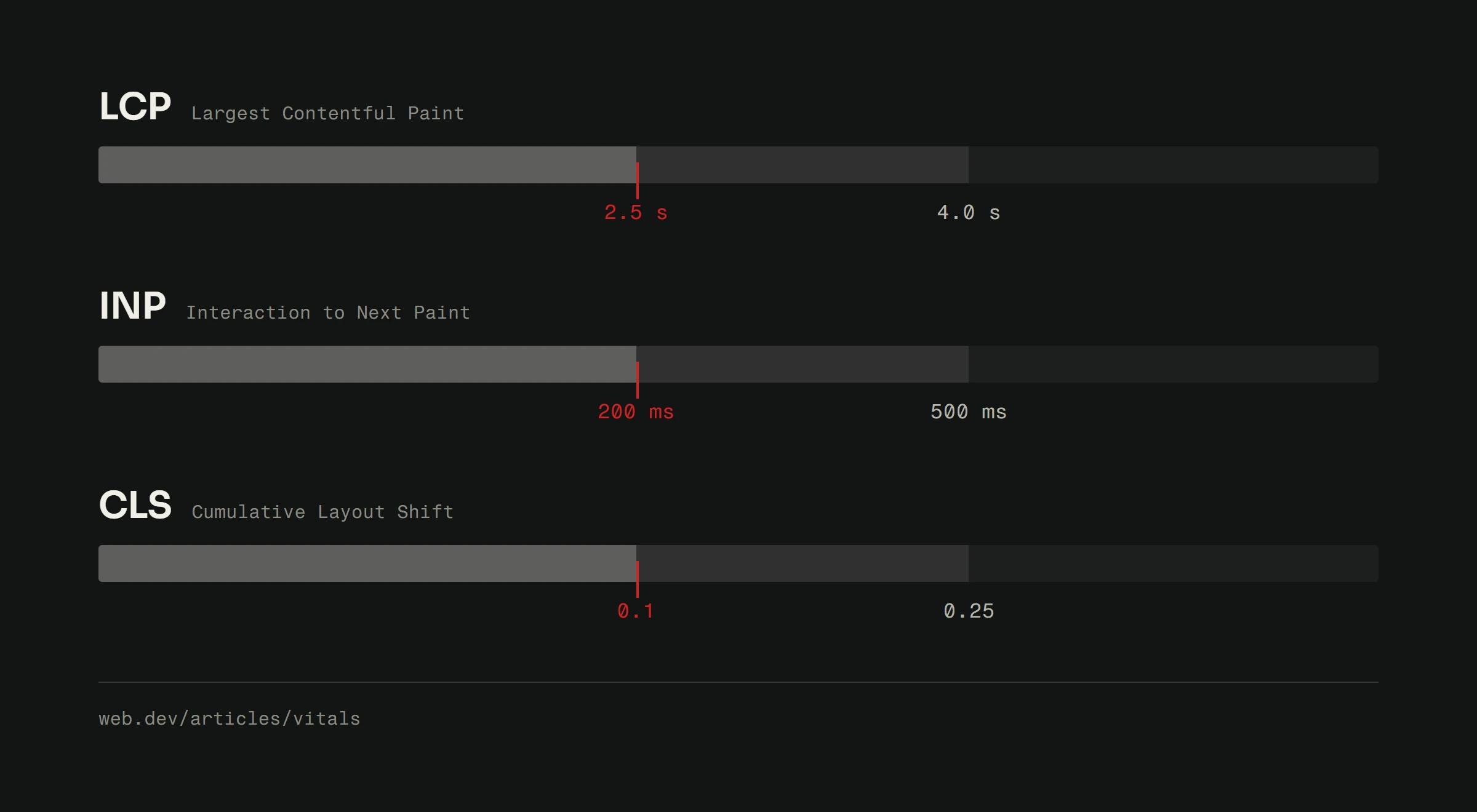
Good LCP: under 2.5 seconds. Anything over 4 seconds is considered poor.
Interaction to Next Paint (INP) replaced the old First Input Delay metric in March 2024. It measures how quickly your page responds when someone interacts with it. Clicks, taps, key presses. INP looks at all interactions during the entire page visit, not just the first one.
Good INP: under 200 milliseconds. If your buttons feel sluggish or your forms lag, your INP is probably bad.
Cumulative Layout Shift (CLS) measures how much your page jumps around while loading. You know that annoying thing where you're about to tap a button and the page shifts, so you tap an ad instead? That's layout shift. Google hates it. So do users.
Good CLS: under 0.1. The lower the better.
Why these metrics affect your rankings
Google's goal is to send people to pages they'll actually enjoy visiting. If your site is slow, unresponsive, or jumpy, people bounce. Google notices.
Sites with good Core Web Vitals tend to have lower bounce rates and higher engagement. Google rewards that with better positions in search results.
This isn't theoretical. Google has explicitly stated that Core Web Vitals are ranking signals. They're part of the broader "page experience" update that's been rolling out and getting refined since 2021.
The practical impact: two sites with equally good content, but one loads in 1.5 seconds and the other in 5 seconds. The fast one wins. Every time.
How to check your scores
Before you fix anything, you need to know where you stand.
Google PageSpeed Insights is the go-to tool. Enter your URL and you'll get scores for all three Core Web Vitals, plus suggestions for improvement. It shows both lab data (simulated tests) and field data (real user measurements).
Google Search Console has a Core Web Vitals report that shows which pages on your site pass or fail, grouped by issue type. This is useful for finding patterns across your entire site.
Chrome DevTools lets you dig deeper if you're technical. The Performance tab shows exactly what's happening during page load, frame by frame.
Start with PageSpeed Insights. It gives you the clearest picture with the least effort.
Fixing slow loading (LCP)
LCP problems almost always come down to one thing: something big is taking too long to load. Here's how to fix it.
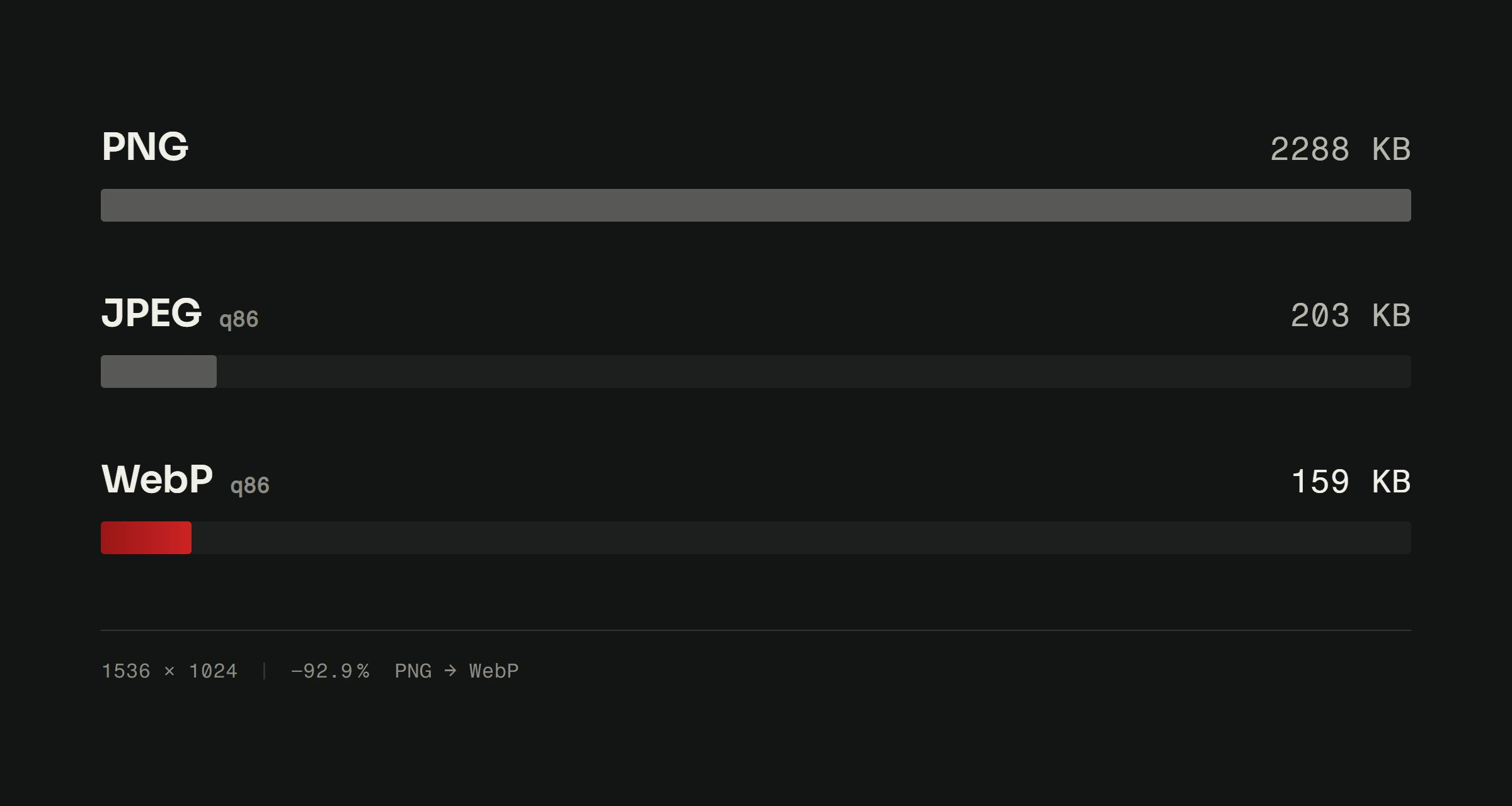
Optimize your images. This is the number one culprit. Use modern formats like WebP or AVIF instead of PNG or JPEG. Compress everything. A hero image doesn't need to be 4MB.
Use lazy loading. Images below the fold don't need to load immediately. Let them load as the user scrolls down. But don't lazy-load your hero image. That's the one you want loaded first.
Minimize server response time. If your server takes two seconds just to start sending data, your LCP can't possibly be good. Better hosting makes a real difference here. We've covered the best options in our hosting comparison guide.
Remove render-blocking resources. If your page has to download and process 15 CSS files and 20 JavaScript files before it can show anything, it's going to be slow. Inline critical CSS, defer non-essential scripts, and cut what you don't need.
For a deeper dive into speed, check out our guide on website speed optimization.
Fixing slow interactions (INP)
INP problems mean your page is doing too much work when someone tries to interact with it. The browser is busy and can't respond fast.
Reduce JavaScript execution time. Heavy scripts block the main thread. If your page loads 2MB of JavaScript, every click will feel slow. Audit your scripts and remove what isn't essential.
Break up long tasks. If a single JavaScript task takes over 50 milliseconds, the browser can't respond to user input during that time. Split heavy operations into smaller chunks.
Reduce third-party scripts. Analytics, chat widgets, social embeds, tracking pixels. Each one adds weight. Be ruthless about what you actually need.
Use web workers for heavy computation. If your page needs to process data, offload it from the main thread so the UI stays responsive.
Fixing layout shifts (CLS)
Layout shift is usually the easiest to fix because the causes are predictable.
Always set dimensions on images and videos. If the browser doesn't know how big an image will be, it renders the page without it, then shifts everything when the image loads. Specify width and height attributes in your HTML.
Reserve space for ads and embeds. If you have ads that load after the page content, they'll push everything down. Give them a fixed container size.
Avoid inserting content above existing content. Banners that slide in from the top, cookie notices that push the page down. These wreck your CLS score.
Use font-display: swap carefully. Web fonts that load late can cause text to reflow. Preload your fonts or use system fonts as fallbacks.
Beyond Core Web Vitals: What else affects rankings
Core Web Vitals matter, but they're not everything. Google uses hundreds of ranking signals. The most important ones alongside page experience:
Content quality. Your content needs to answer the search query better than anyone else. No amount of speed optimization fixes thin, unhelpful content. Understanding SEO fundamentals is essential.
Backlinks. Other websites linking to yours signals authority. Quality over quantity.
Mobile-friendliness. Google indexes the mobile version of your site first. If it's not usable on a phone, you're in trouble.
HTTPS. Your site needs an SSL certificate. Non-HTTPS sites get penalized. This is also a basic security requirement.
Structured data. Schema markup helps Google understand your content and can get you rich snippets in search results.
The real competitive advantage
Most businesses ignore Core Web Vitals because they seem technical. That's exactly why fixing yours gives you an edge.
If your competitors have slow, janky websites and yours is fast and smooth, Google notices. Users notice. And the gap compounds over time as your engagement metrics improve and your rankings climb.
This is one of those areas where a technically well-built website pays for itself. Sites built on clean, custom code tend to score much better on Core Web Vitals than sites loaded with page builders and plugins. It's the difference between a tailored suit and one off the rack. Both work, but one fits better. A custom-built site with a premium aesthetic loads fast on every device because there is no builder overhead dragging it down.
Your Google ranking isn't just about keywords and backlinks anymore. It's about how your website performs for real users. If you want to know where your site stands and what to fix first, our free website analysis will show you exactly that.