How Much Does a Website Actually Cost? An Honest Breakdown

Website pricing is confusing on purpose. Here is what actually drives cost, what you should budget for, and where agencies quietly overcharge you.

Ask five web companies what a website costs and you'll get five wildly different answers. That's not an accident. The web industry benefits from pricing confusion. So let's cut through it.

Here is what actually determines the price, what's worth paying for, and where you're probably getting overcharged.

Why "It Depends" Is Actually Honest

You'll hear this from everyone. It's annoying, but it's true.

A five-page site for a local bakery and a 200-product e-commerce store for a fashion brand are completely different projects. Different complexity, different timelines, different skill sets. Quoting a flat rate for "a website" would be like a contractor quoting you for "a building" without knowing if you want a garage or a hotel.

The honest answer is always a range, qualified by your specific needs.

The Real Cost Drivers

Here's what actually moves the needle on price:

Number of unique page layouts. Not the total number of pages. Ten blog posts using the same template cost almost nothing extra. Ten pages with completely different layouts cost ten times the design work. This is the single biggest factor most clients misunderstand.

Custom functionality. A contact form is cheap. A booking system with calendar integration, automated emails, and payment processing is expensive. Every feature that requires custom code adds development time.

Content creation. Copywriting, photography, video production. Many companies quote web design separately from content, then surprise you later. Ask upfront what's included.

E-commerce complexity. Product variations, inventory management, shipping calculators, tax rules, payment gateways. Each layer adds cost. A store with 20 simple products is a different beast from one with 2,000 SKUs and multiple warehouses.

SEO foundation. A properly built site includes technical SEO from day one: clean URLs, meta tags, structured data, fast loading times, mobile responsiveness. This should be standard, not an add-on. If someone charges extra for "SEO-friendly development," they're charging you for doing their job correctly.

Realistic Price Ranges in 2026

These are ranges for custom-built websites from professional teams. Not templates. Not DIY builders. Not your nephew with a Squarespace account.

Simple business website (5-10 pages): EUR 1,000 to EUR 3,000. This gets you a custom design, responsive layout, contact form, basic SEO setup, and a content management system. Good for service businesses, restaurants, local shops.

Professional corporate website (10-30 pages): EUR 3,000 to EUR 8,000. Multiple page layouts, blog section, possibly multilingual support, advanced forms, integrations with third-party tools. Typical for established businesses that need a serious online presence.

E-commerce store: EUR 5,000 to EUR 20,000+. The range is huge because e-commerce complexity varies enormously. A simple store with 50 products and Stripe payments sits at the lower end. A multi-language store with thousands of products, ERP integration, and custom checkout flows sits at the upper end.

Web application: EUR 10,000+. If your project involves user accounts, dashboards, real-time data, or complex business logic, you're building an application, not a website. Budget accordingly.

These numbers reflect the Croatian and European market. US and UK companies typically charge 2-3x more for comparable work.

Where we sit in those ranges. Since we publish our own prices, it would be strange to quote the market and stay quiet about ourselves. A one-page starter site with us begins at €500 and a full business site at €1,200. Online stores and apps both start at €1,500, below the ranges above rather than at them. The pricing tool turns a few answers into an exact number you can order, and that number is what you pay.

What's NOT Included (But Should Be Discussed)

Hosting. EUR 5 to EUR 50/month for most websites. Your web developer should recommend a hosting setup, but you should understand what you're paying for. Cheap hosting means slow sites. Slow sites lose visitors.

Domain name. EUR 10 to EUR 30/year for standard domains. Not a significant cost, but you must own it yourself. Never let anyone register it under their account.

Ongoing maintenance. Security updates, plugin patches, content changes, performance monitoring. Budget EUR 50 to EUR 200/month depending on complexity. Websites without maintenance become security risks within months.

Content updates. Either learn to use your CMS, or budget for someone to make changes for you. A good CMS setup lets you handle 90% of updates yourself.

Website vs. Web Shop: The Price Gap Explained

A standard website displays information. A web shop processes transactions. That distinction is why e-commerce costs significantly more.

Web shops need product management, inventory tracking, secure payment processing, order management, shipping logic, tax calculations, and customer account systems. Each of these is a separate feature that needs building, testing, and maintaining.

They also need stronger security. When you handle customer payment data, the stakes are higher. SSL certificates, PCI compliance considerations, and regular security audits aren't optional.

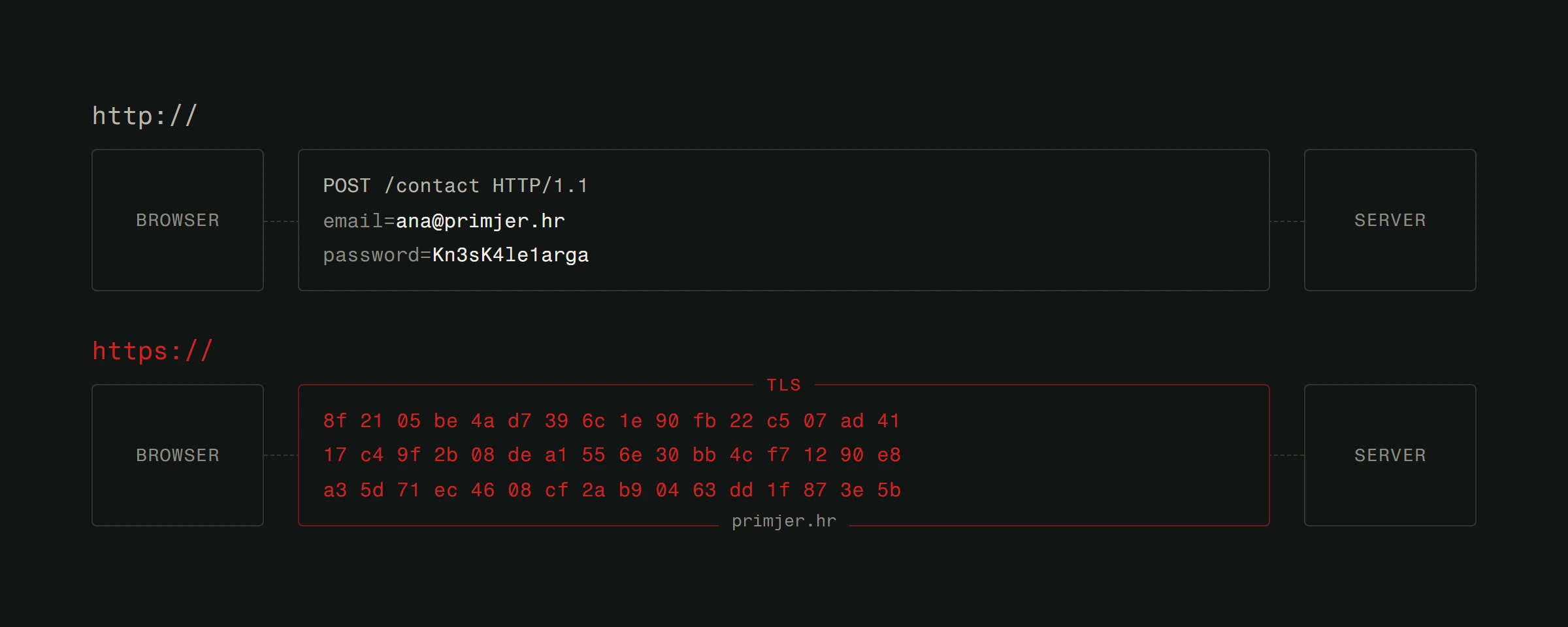
The same contact form request drawn twice on the path from browser to server. Over http:// the request line and the email and password fields are readable. Over https:// the whole request is hexadecimal ciphertext inside a band marked TLS, with only the hostname shown outside it.
Why a shop costs more to secure than a brochure site. The lower row is the baseline the moment card and customer data cross the wire, and nobody should be charging it as an extra.View full-size image

If someone quotes you the same price for a web shop as a regular website, they're either cutting corners on security or they're planning to surprise you with add-on costs later.

Red Flags When Getting Quotes

Watch out for these:

No discovery phase. If someone quotes you a firm price before asking detailed questions about your business, they're guessing. Or worse, they plan to under-deliver and upsell later.

Everything is an add-on. Responsive design, basic SEO, SSL certificate. These aren't extras. They're baseline requirements for any professional website in 2026.

Template-based but custom-priced. Some companies charge custom development rates but deliver modified WordPress themes. Ask directly: are you building custom, or starting from a template? Both are valid approaches, but they should be priced differently. If you are considering the DIY route, our guide on building a website without coding explains where no-code tools work and where they fall short.

No discussion about ongoing costs. A website isn't a one-time purchase. If nobody brings up hosting, maintenance, and updates, they're either inexperienced or hoping you'll come back when things break.

How to Get Better Value

Start with strategy. Know your goals before you start designing. A clear landing page strategy, defined user journeys, and documented requirements save enormous amounts of development time. Our guide on which web design package to choose walks through how to scope your project based on actual needs.

Prioritize user experience. A beautiful site that confuses visitors is worthless. Invest in clear navigation, fast load times, and intuitive layouts before flashy animations.

Launch lean, then iterate. You don't need every feature on day one. Launch with core functionality, measure what users actually do, then invest in improvements based on real data.

Own your assets. Domain, hosting account, analytics, source code. If you can't take these with you when you switch providers, you don't actually own your website.


Want a straight answer about what your specific project would cost? Check our pricing page or reach out for a free estimate. No sales pitch. Just numbers.

Share this article

Related articles

ContactWhatsApp