In Zadar you can choose between freelancers, small studios and teams working remotely to build your website. There are options, but that also means you need to know what separates good work from a theme with your logo pasted in.
Here's what to look for, what to avoid and how to get a website that actually works for your business, including what changed for businesses in Croatia in 2026.
Why local still matters
You can hire a developer anywhere in the world. So why work with someone in Zadar?
In person is still better than a video call for some things. Kicking off a project, reviewing designs together, talking through how your business actually works. Those conversations go better face to face, especially when the team needs to understand your market and your customers.
They know the market. A team from Zadar knows Croatian business culture and local customers, and knows how a city works that lives off guests from all over Europe in summer. For an apartment, a charter or a restaurant, that means a site in several languages, because a guest from Germany searches in German.
Time zone and language. No waiting twelve hours for a reply and no misunderstandings over language. When something on your site needs fixing at ten in the morning, you can call someone who picks up.
Accountability. It's hard to shortchange a client you might meet at the market. Local reputation matters, and teams that live from referrals take more care over the result.
What good web development looks like
Whoever you hire, a professional result should include this:
A design made for your brand, not a template with your logo. Your site should reflect your brand, not look like thousands of others on the same WordPress theme. Ask to see a design proposal before development starts.
Equally good on phone and computer. According to StatCounter, in September 2026 51.5% of web browsing in Croatia was on mobile and 46.7% on desktop. It's close to half and half, so a site has to work equally well on both. A guest looking for accommodation may be on a phone on the beach, a company's purchasing team on a computer in the office. That isn't an extra feature but a basic requirement.
Fast loading. Google considers a page's main content fast enough when it appears in under 2.5 seconds, and that applies on a mobile connection too. Ask about speed optimization in the first conversation. If the team doesn't bring it up themselves, that's a warning sign.
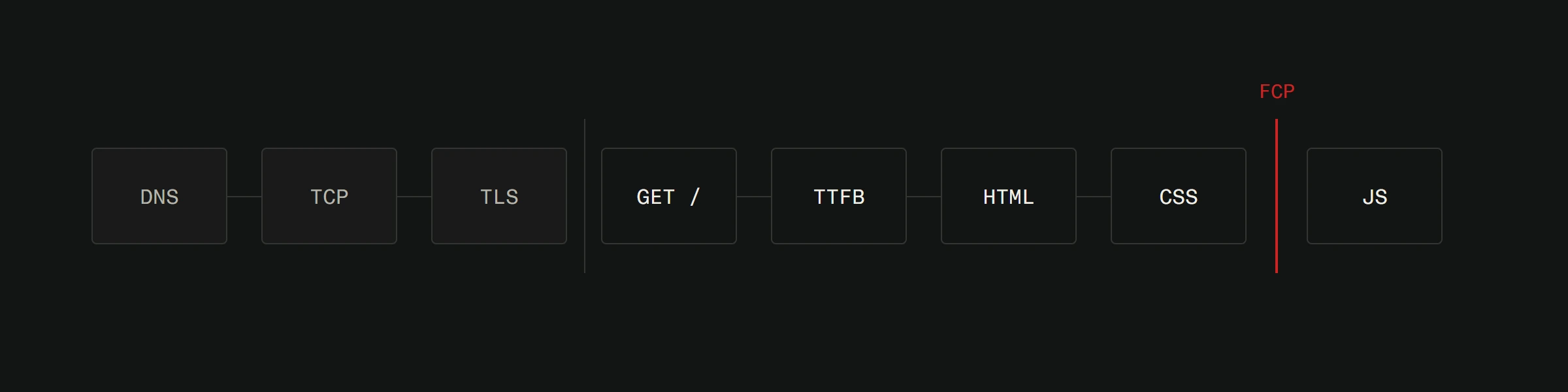
SEO from day one. Clean code, a proper heading structure, meta tags, optimized images and structured data should be part of the site from the start. SEO isn't something you add after launch, but part of how the site is built.
Content editing. You should be able to change text, images and basic content yourself, without calling a developer for every small thing. A well-set-up CMS gives you control over your own site.
What a business website in Croatia must have in 2026
A few rules that took effect recently concern websites directly, so raise them with whoever builds yours:
- Accessible online shops. Croatia's Act on Accessibility Requirements for Products and Services (Narodne novine 89/25), in force since 28 June 2025 and implementing the European Accessibility Act, covers e-commerce services. Microenterprises providing services, with fewer than ten employees and revenue up to two million euros, are exempt.
- A withdrawal function. Since 19 June 2026, a consumer contract concluded through a website must be possible to withdraw from through a clearly labelled function on the site (Consumer Protection Act, Article 81.a, Narodne novine 59/26).
- Fiscalised receipts. Since 1 January 2026, every receipt issued to consumers in Croatia is fiscalised, whatever the payment method, including cards and bank transfers. If the site sells, it has to connect to software that issues and fiscalises receipts.
What that means for the cost is covered in our guide to website and web shop prices, and the difference between a web shop and an online store in web shop, online store or web store.
Red flags to watch for
"We use WordPress for everything." WordPress is fine for blogs and simpler sites. But someone who uses the same tool for every project, whatever the requirements, fits your business to the tool rather than the other way round. Different projects need different approaches.
No discovery phase. If someone gives you a price and a deadline before they understand your business, goals and audience, they're planning to deliver something generic. Good work starts with good questions.
They can't show similar work. Every professional team should have a portfolio of finished projects. If they can't show you sites that still work today, are fast and look good, that tells you about the quality of their work and their client relationships.
Vague pricing. "It depends" is fine as a start. "We'll figure it out as we go" isn't. Before work starts you should get a clear proposal with scope, deliverables and price.
They want to own your domain. Your domain, hosting account, content and code are yours. Anyone who registers your domain in their own name creates dependence, not a partnership.
Questions to ask before signing
These questions quickly show who you're dealing with:
-
Which platform or technology do you recommend for my project, and why? The answer should be tied to your needs, not the same for every client.
-
What does your process look like? You want to hear about discovery, wireframes, design, development, testing and launch as separate steps.
-
Who owns the code and materials when the project is done? The only acceptable answer: you.
-
What happens after launch? Maintenance, hosting, support, updates. Make sure it's clear what's paid regularly and who is responsible for what.
-
Can I talk to one of your clients? A team that believes in its work will gladly connect you with someone it has worked for.
What Version2 does differently
We're based in Zadar and build websites for clients in Croatia and abroad. Here's how we work:
We think about your business first, and technology comes second. The right technology depends on what you want to achieve, not on what's easiest for us.
We build for speed and user experience. A beautiful site that loads slowly or confuses visitors hasn't succeeded, however good it looks in a screenshot.
We cover the whole job: web design, development, SEO and maintenance. One team, one relationship, no passing responsibility between suppliers.
The Zadar web scene
In a city that lives off tourism for much of the year, a website is often the first place a guest or customer meets you, before they call or come by. That's why it pays to compare several proposals and look at real work, not just the price.
Choice is good for you: it means you can pick, and that bad work gets talked about quickly. The businesses that get the most from their website treat it as an investment in the business, not a cost to keep to a minimum.
Whether you're a restaurant on Kalelarga, a charter in Sukošan or a tech company in the city centre, a good website can be the difference between being found and being forgotten.
Want to talk about your project? Get in touch and we'll give you an honest assessment of what you need and what it will cost. No jargon, no pressure.