
You built a website. It has a homepage, a services page, an about page, and a contact form. It looks great. Now what?
If the answer is "wait for people to find it," you're going to be waiting a long time. A static website with five pages gives Google almost nothing to work with. No fresh content. No keyword variety. No reason to crawl your site again after the initial indexing.
A blog fixes that. Not because blogging is trendy. Because it's the single most effective way to get your website in front of people who are searching for what you offer.
The SEO case for blogging
Let's talk about how search engines actually work.
Google's job is to match search queries with the best possible content. When someone types "how much does a website cost in Croatia," Google looks for pages that answer that question thoroughly. If your website doesn't have a page about that topic, you don't exist for that search.
Every blog post you publish is a new page. A new page is a new opportunity to rank for a specific search query. Ten blog posts means ten opportunities. A hundred means a hundred.
This isn't speculation. It's how SEO works at the most fundamental level. More quality pages covering relevant topics means more chances to appear in search results. For a deeper understanding, check out our guide on what SEO optimization actually is.
Keywords: Answering questions people actually ask
Here's where blogging becomes strategic instead of just "publishing stuff."
Your homepage probably targets broad terms like "web design Zadar" or "website development Croatia." Those are competitive. Everyone in your industry is fighting for them.
Blog posts let you target long-tail keywords. These are specific, question-based phrases that fewer people search for individually but add up to massive traffic collectively.
Examples:
- "How often should I update my website?"
- "What's the difference between WordPress and custom development?"
- "How to choose colors for my business website"
- "Do I need an SSL certificate?"
Each question is a blog post. Each blog post targets people who are actively thinking about the topic you sell. They're not browsing randomly. They're looking for answers. And if your blog provides the best answer, you've earned their attention.
For practical advice on actually writing these posts well, read our guide on writing SEO-friendly blog posts.
Fresh content tells Google you're alive
Websites that haven't been updated in two years don't inspire confidence. Not in visitors, and not in search engines.
Regular publishing signals that your business is active. Google crawls active sites more frequently. More frequent crawling means new content gets indexed faster. Faster indexing means faster visibility in search results.
You don't need to publish daily. Once or twice a month is enough for most businesses. The key is consistency. A blog that gets three posts one month and then nothing for six months sends mixed signals. A blog that gets two posts every month for a year sends a clear signal: this business is here, it's active, and it knows its stuff.
Backlinks: Other sites pointing to yours
This is the part of SEO that most business owners don't think about, but it matters enormously.
When another website links to your blog post, Google interprets that as a vote of confidence. The more quality sites linking to your content, the more authority your website builds in Google's eyes.
Nobody links to a generic services page. But they'll link to a helpful blog post that answered a question nobody else answered well. An in-depth guide about choosing the right font for a website. A practical breakdown of how AI chatbots work. A comparison of different e-commerce platforms.
Useful content earns links. Links build authority. Authority improves rankings. Rankings bring traffic. It's a flywheel, and the blog is what sets it spinning.
Building authority in your field
When a potential client is deciding between you and a competitor, they check both websites. One has five pages of service descriptions. The other has those five pages plus 30 blog posts demonstrating deep knowledge of the industry.
Who do you trust more?
Blog content proves you know what you're doing without you having to say "trust me, we're experts." Every post is evidence. A guide about choosing the right font shows you understand design. A post about how colors affect user experience shows you think about details.
This kind of content does your selling before the sales conversation even starts. By the time someone contacts you, they've already read three of your articles. They already trust your judgment. The conversation shifts from "why should I hire you" to "when can we start." A targeted blog strategy can turn a business from one of many local options into the brand people find and trust when searching for information in that space.
The compounding effect
This is the part that makes blogging genuinely powerful over time.
A social media post has a lifespan of hours. An ad stops working the moment you stop paying. A blog post published today can still drive traffic three years from now.
Some of our best-performing content was published over a year ago. It still ranks. It still brings visitors. It still generates leads. Every month, with zero additional effort.
That's compounding. Post number one brings in 50 visitors per month. Post number ten brings in 500. Post number fifty brings in 5,000. Each post adds to the total, and none of them expire.
No other marketing channel works like this. Paid ads are a treadmill. Social media is a treadmill. Blogging is an investment that pays dividends.
What makes a blog post actually work
Not all blog posts are equal. A 300-word post that says nothing original isn't going to rank or convert. Here's what actually works.
Answer a specific question. Every post should have a clear reason to exist. One topic. One question. One comprehensive answer.
Go deeper than the competition. Search for your target keyword. Read the top five results. Write something better. More detailed. More practical. More up to date.
Make it scannable. Short paragraphs. Clear headings. Bullet points where they help. People scan before they read. If the scanning doesn't look promising, they leave.

Include a next step. Every post should lead somewhere. Another relevant article. A service page. A contact form. Don't let readers reach the end and wonder what to do next.
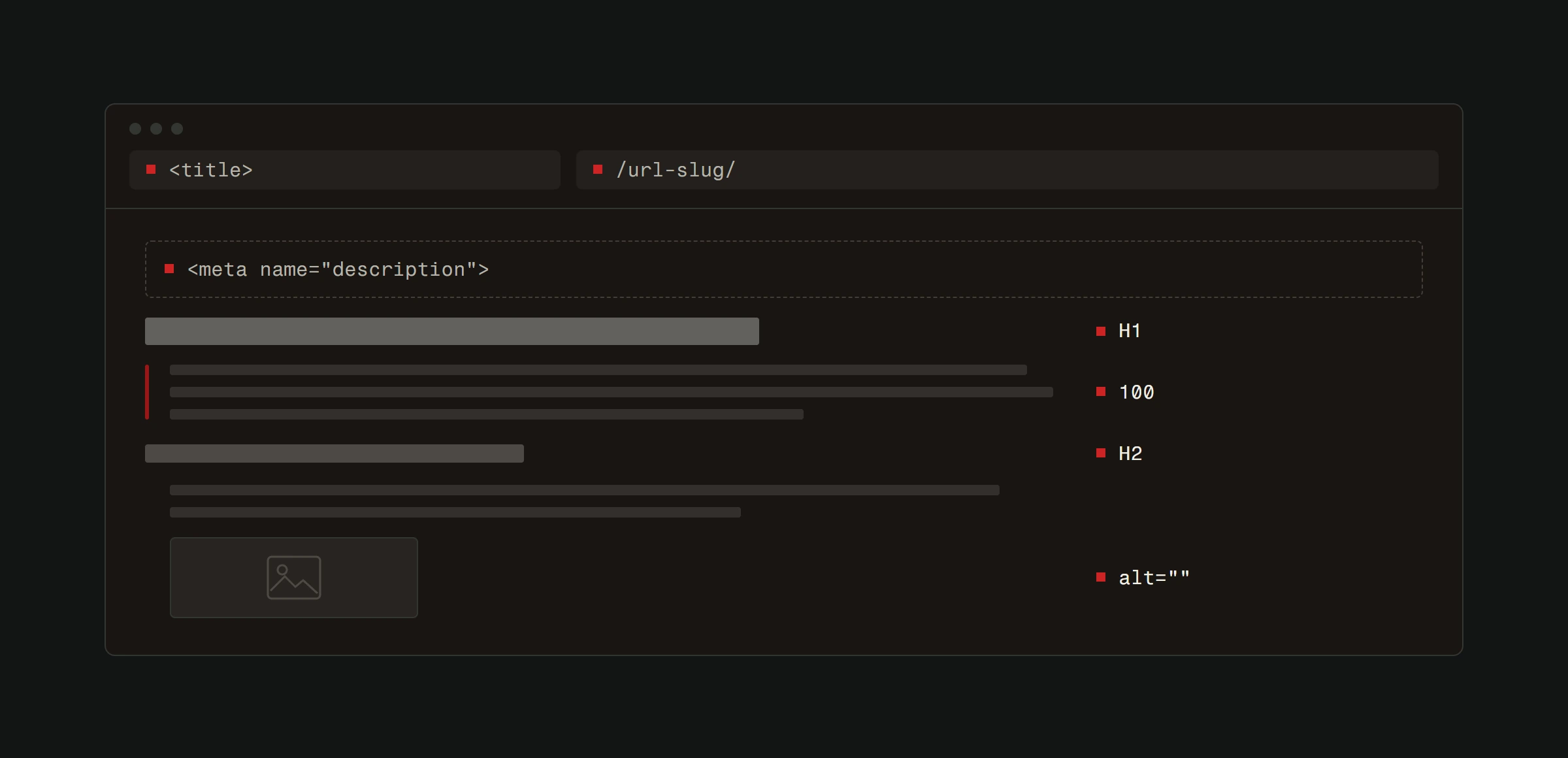
Optimize the basics. Title tag, meta description, heading structure, image alt text, internal links. These aren't optional extras. They're foundational. Our blog writing tips cover these in detail.
The most common excuse (and why it's wrong)
"We don't have time to blog."
You don't have time not to. Every month without a blog is a month your competitors are publishing content that outranks you. Every question a potential customer googles and finds your competitor's answer instead of yours is a missed opportunity.
You don't need a content team. You need one person who knows the business and one hour per week. Start with the questions your customers ask most. Answer them in writing. Publish them on your website. That's it. If you want a framework for producing consistently good content, our guide on how to write blog posts like a professional covers the entire process from topic selection to final edit.
If even that feels impossible, consider working with a web development partner who can help with content strategy as part of the overall site build. The best websites aren't just well-designed. They're well-fed with content that works for both visitors and search engines.
Ready to make your website work harder? Start with our guide on writing SEO-optimized blog posts or explore how professional SEO services can accelerate your results.