You built an online store. Products are listed, payments work, shipping is set up. Now comes the question nobody warned you about: where are the customers?
Having an online store without a traffic strategy is like opening a shop in the middle of nowhere and wondering why nobody walks in. The store itself is only the beginning. Getting people there, and getting the right people there, is an entirely different skill.
Start with SEO. Seriously.
Paid ads get all the attention, but organic search is where long-term e-commerce growth happens. When someone types "handmade leather wallet Croatia" into Google and your product page shows up, that visitor is already interested in buying. You did not pay for that click, and it will keep working months or years from now.
E-commerce SEO starts with the basics:
Optimize your product pages. Every product needs a unique title tag, a unique meta description, and a description written for humans and search engines. Most stores either duplicate the manufacturer's copy or leave these fields blank. Both are missed opportunities.
Build out category pages. Category pages often rank better than individual products because they target broader keywords. "Women's hiking boots" is a category page keyword. "Salomon X Ultra 4 GTX Women's" is a product page keyword. You need both.
Create supporting content. A blog attached to your store is one of the most effective SEO tools. Write buying guides, comparison posts, how-to articles. This content captures search traffic from people who are not ready to buy yet but are in the research phase. If you want to understand how blogging drives traffic, this guide on writing SEO-optimized blog posts is a good starting point.
Fix the technical side. Site speed, mobile responsiveness, clean URLs, proper image optimization. These are not glamorous, but Google cares about them. A slow store loses customers and rankings simultaneously.
For a full picture of what goes into this, check out our SEO overview.
Email marketing is your best returning customer tool
Social media algorithms change. Ad costs rise. But an email list is yours. Nobody can take it away or throttle your reach.
Every online store should be collecting email addresses from day one. Not just from customers. From visitors too. Offer something in return: a discount code, a buying guide, early access to new products. Then stay in touch.
Welcome sequences turn new subscribers into first-time buyers. A simple three-email series that introduces your brand, shows your best products, and offers a small incentive can have a surprisingly high conversion rate.
Abandoned cart emails recover lost sales. Someone added a product to their cart and left? Send them a reminder 1-2 hours later. Then another in 24 hours. Most brands recover 3-5% of abandoned carts this way, while well-optimized sequences with multiple emails can push that to 10-15%.
Post-purchase emails build repeat business. Thank them. Ask for a review. Suggest related products. A customer who has already bought from you is far more likely to buy again than a new visitor.
Content marketing builds trust before the sale
Not everyone who visits your store is ready to buy. Some are comparing options. Some are still figuring out what they need. Content marketing meets these people where they are.
Write product descriptions that sell on their own. Create buying guides that help people choose between options. Publish comparison articles that honestly evaluate different approaches.
This content does double duty. It brings in search traffic from informational queries. And it positions your store as a credible source that knows its space. When someone reads three of your guides and trusts your expertise, buying from you feels natural.
Retargeting brings people back
Most visitors will not buy on their first visit. That is normal. But you do not have to let them vanish.
Retargeting (sometimes called remarketing) shows ads to people who already visited your store. They browsed your running shoes page but did not buy? Now they see your running shoes in their social media feed or on other websites.
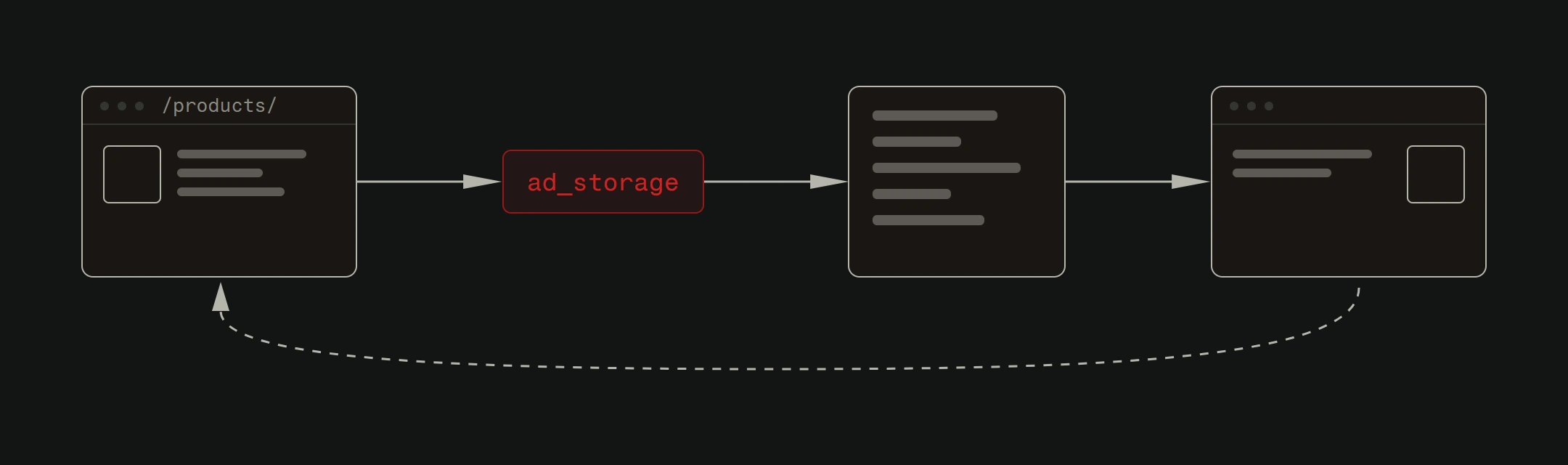
This works because it targets warm leads. These are not random people. They already showed interest. The retargeting ad just gives them the nudge to come back.
Keep the ads specific. Show them the exact products they looked at, not a generic store banner. Specificity converts.
Your store itself is a marketing tool
This is the part most store owners miss. Your website is not just the container for your products. It is an active part of your marketing.
Page speed affects conversions directly. A one-second delay in load time can drop conversions by 7%. If your store is slow, you are paying for traffic that leaves before it sees a product.
Mobile experience is not optional. More than half of e-commerce traffic comes from phones. If your store is awkward on mobile, clunky to navigate, or slow to load, you are losing the majority of your audience.
Trust signals matter. SSL certificates, clear return policies, visible contact information, customer reviews. These are not nice-to-haves. They are the reason someone decides to enter their payment details on your site instead of closing the tab.
User experience drives sales. Can someone find what they want in three clicks? Is the checkout process fast and frictionless? Every extra step between "I want this" and "I bought this" loses customers.
The best marketing strategy in the world cannot fix a store that frustrates its visitors. How your store is built matters as much as how you promote it.
The long game
The stores that succeed long-term are the ones that build multiple traffic channels over time. SEO for steady organic growth. Email for repeat customers. Content for trust and authority. Retargeting for recovering lost opportunities.
No single channel is enough on its own. The magic is in how they work together. Someone finds you through a blog post, joins your email list, gets a welcome sequence, comes back to buy, and then gets retargeted with a complementary product.
That is not luck. That is a system. And it starts with a store that is built to perform.
Need an online store that is ready for real traffic? See how we build e-commerce sites designed to convert visitors into buyers.