
AI can help prepare content, organize enquiries and find information in a business's documents. Its usefulness depends on the task, source material and checks around it. Buying a tool does not establish better marketing results; a working process and measured outcomes do.
The shift: From guessing to knowing
The useful change is easier access to material a team already has. A draft summary of customer questions can help someone spot a recurring concern, but the original messages remain the evidence. Missing data and incorrect classifications can distort the summary. Compare it with a sample of the source records before changing a campaign or offer.
What AI actually does well in marketing
Useful candidates include drafting answers from approved documents, extracting agreed fields from an enquiry, preparing variations from a verified product description and summarizing an internal meeting. Each output needs a defined recipient and acceptance check. Straightforward scheduling or field copying may be better handled by ordinary automation. The practical workflow guide explains how to separate those jobs.
What AI still can't do
A model can produce a plausible sentence that is wrong. It cannot establish that a payment happened or an appointment exists unless a trusted system confirms it. People remain responsible for claims, offers and decisions. Google's guidance on generated content stresses accuracy and value. Publishing more drafts without checking them is not a content strategy.
Where small businesses should start
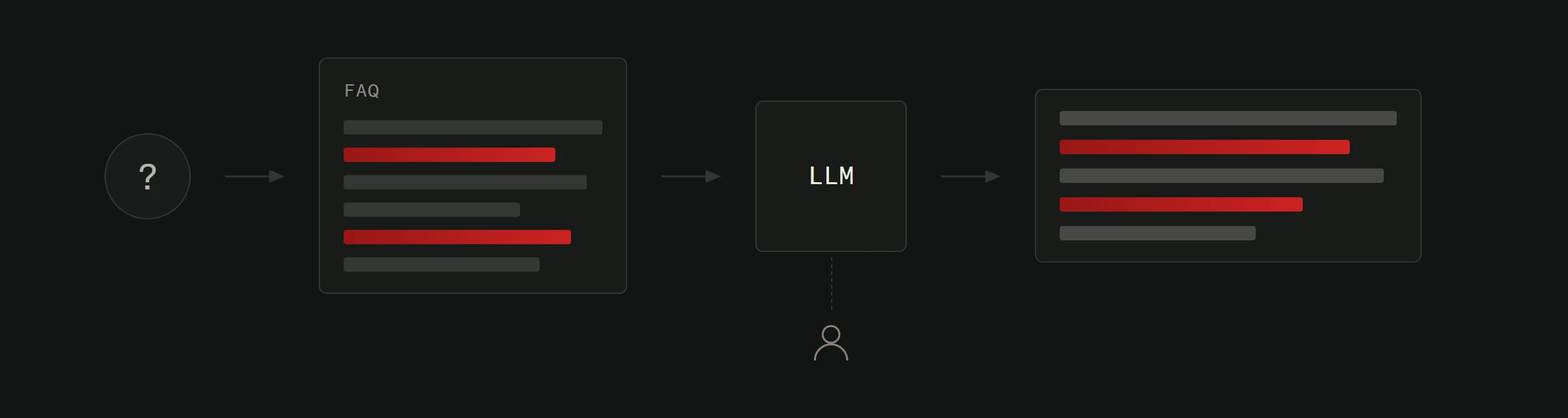
Choose one recurring job with clear inputs and a result someone can assess. Write down the present process, including review time and errors. Then test a small set of representative cases, including missing information and requests that should be declined. Our AI integration page includes a working reply-desk demonstration: it prepares a draft from permitted documents and leaves sending to a person.
The privacy question
Decide which documents the system may read, which users may access them and which providers receive information. Set retention and deletion rules before using real records. A document being available to an administrator does not mean every visitor should be allowed to retrieve it. The applicable data-protection and disclosure requirements depend on the actual use; they need their own review rather than a blanket claim that one checkbox covers everything.
The real competitive advantage
Maintain the source information, test important changes and provide a clear human handoff. Record whether the system completed the job correctly, how much checking it needed and what it cost to operate. An assistant does not automatically improve simply because more people use it. Improvements require deliberate changes and evaluation.
What happens if you wait
Waiting can be reasonable if the process or data is not ready. Prepare the source material and define success first. If you want to assess a possible starting point, the AI-readiness check can structure the discussion. The integration service and pricing calculator explain the available scope without assuming that every business needs the same tool.