
You could write the most insightful blog post ever published. If Google can't find it, nobody reads it. That's the gap SEO fills.
SEO isn't a cheat code. It's a set of practices that help search engines understand what your content is about and decide who should see it. Get it right and your blog becomes a steady source of traffic, leads, and authority. Ignore it and you're shouting into a void.
Here's how to write blog posts that both humans and search engines love.
Start with keyword research (not a blank page)
Most people start writing with a topic in mind. That's backwards. Start with what people actually search for.
Keyword research tells you the exact phrases your target audience types into Google. This determines not just what you write about, but how you frame it.
How to find the right keywords
Use Google Keyword Planner (free), Ubersuggest (free tier available), or Ahrefs/SEMrush (paid, more powerful). Look for:
- Search volume. How many people search for this term monthly? Too low and nobody's looking. Too high and the competition is brutal.
- Competition level. How hard will it be to rank? New blogs should target low-to-medium competition keywords.
- Search intent. Is the person looking for information, a product, or a specific website? Match your content to the intent.
Target one primary keyword per post. Pick 2-3 related secondary keywords to weave in naturally. Long-tail keywords (longer, more specific phrases) are often the best opportunity for newer sites because they have less competition and more specific intent.
Where to place your keywords
- Title (H1). Your primary keyword belongs here. Front-load it when possible.
- First 100 words. Get your keyword in early. Google pays more attention to the beginning of your content.
- At least one H2 heading. This signals topical relevance.
- Meta description. This is the snippet users see in search results. Include the keyword and make it compelling enough to click.
- URL slug. Keep it short and include the primary keyword.
- Image alt text. Describe what the image shows and include the keyword where it's natural.

The emphasis is on "natural." If you're cramming keywords into every sentence, Google notices and your readers definitely notice. Write for humans first. Place keywords where they fit organically.
Structure your posts for readability and crawlability
Google and human readers both appreciate well-organized content. A wall of text with no structure ranks poorly and gets abandoned quickly.
Use heading hierarchy
H1 is your title. Use it once. H2 tags mark your main sections. H3 tags break those sections into subsections. This hierarchy tells Google what your article covers and how the information is organized.
Don't skip levels. Don't use H3 before H2. Don't use headings just to make text bigger.
Short paragraphs, short sentences
Two to three sentences per paragraph. This isn't academic writing. Online readers scan. Give them content that's easy to scan.
Use bullet points and numbered lists when you're covering multiple items. They break up visual monotony and make key information easy to find.
Internal links
Every blog post should link to 2-4 other pages on your site. This does three things:
- Helps Google discover and index more of your content.
- Passes authority between pages, boosting rankings for linked content.
- Keeps readers on your site longer, which Google interprets as a quality signal.
Link to relevant content naturally. If you mention website speed, link to your speed optimization guide. If you mention backlinks, link to your backlinks article. Make the anchor text descriptive, not "click here."
Write content worth ranking
Google's algorithm has gotten remarkably good at evaluating content quality. You can nail every technical SEO factor and still not rank if your content doesn't deserve it.
Depth beats breadth
A 500-word overview of a topic won't outrank a 1,500-word deep dive. Not because length itself matters, but because thorough coverage signals expertise. You need enough space to cover a topic properly, answer related questions, and provide specific examples.
Aim for 800-1,500 words per post. Some topics warrant more. Very few warrant less.
Be specific
Vague advice is everywhere. "Create quality content." "Focus on your audience." "Be consistent." This tells the reader nothing they didn't already know.
Specific advice earns trust and links. Instead of "optimize your images," say "compress images to under 200KB using WebP format, add descriptive alt text, and use responsive srcset attributes." Specificity is what separates content that ranks from content that fills space.
Show original thinking
Google explicitly values content that demonstrates experience and expertise (this is the E-E-A-T framework: Experience, Expertise, Authoritativeness, Trustworthiness). Rehashing what the top 10 results already say won't get you into the top 10.
Add your own perspective. Share examples from your work. Include data or results you've observed firsthand. If you're writing about SEO for blogs, draw on actual experience with SEO. This is what Google's helpful content system rewards.
Optimize your images
Images make posts more engaging and provide additional SEO signals. But unoptimized images are one of the most common performance killers.
File size
Compress every image before uploading. Use WebP format for the best balance of quality and file size. A hero image should be under 200KB. If you're uploading 2MB photos straight from your camera, your page speed suffers badly.

Alt text
Alt text serves two purposes: accessibility (screen readers use it to describe images to visually impaired users) and SEO (Google reads it to understand what the image shows).
Write descriptive, honest alt text. "Screenshot of Google Search Console showing keyword performance data" is good. "SEO keyword ranking Google best tips" is keyword stuffing and helps nobody.
File names
Rename your images before uploading. "website-speed-test-results.webp" tells Google something useful. "IMG_20230714_143822.jpg" tells it nothing.
Technical details that affect blog SEO
Page speed
Slow pages rank worse. Google measures your Core Web Vitals and uses them as ranking signals. For blog posts specifically:
- Compress images (the biggest speed culprit for blogs).
- Minimize external scripts (trackers, widgets, social embeds).
- Use lazy loading for images below the fold.
- Choose hosting that serves pages fast.
Test at PageSpeed Insights and fix what it flags. Speed matters more than most bloggers realize.
Mobile experience
Google indexes the mobile version of your site first. If your blog looks bad on a phone, your rankings suffer on all devices.
Check that text wraps properly, images resize correctly, tap targets are big enough, and nothing overflows the viewport. Our responsive design article covers this in depth.
Meta descriptions
Every blog post needs a unique meta description. This is the text snippet that shows up under your title in search results. Keep it under 155 characters. Include your primary keyword. Make it a compelling summary that convinces someone to click.
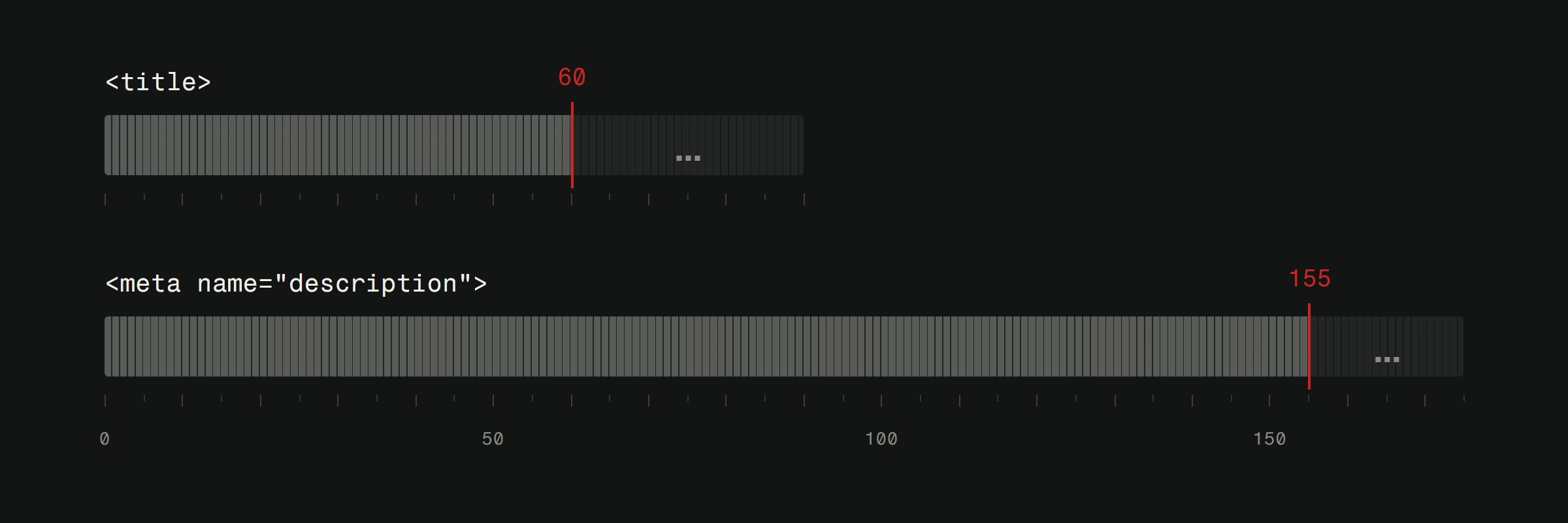
A good meta description won't directly boost your ranking, but it increases your click-through rate. More clicks from search results signal to Google that your content is relevant.
After you publish: promotion and monitoring
Writing the post is half the work. The other half is making sure people find it.
Promote your posts
Share on social media. Send to your email list. Mention in relevant online communities. The initial traffic and engagement signals help Google understand that your content is worth ranking.
Monitor performance
Use Google Search Console to track which queries your post appears for, how many impressions and clicks it gets, and where it ranks. Give it 2-4 weeks to settle into its ranking position before making changes.
If a post isn't performing after a month, review it. Is the keyword too competitive? Is the content thin compared to what's ranking above you? Is the search intent mismatched? Diagnose the problem and improve the post rather than abandoning it.
Update regularly
Published content isn't finished content. Review your top-performing posts every 6-12 months. Update statistics. Add new information. Remove outdated advice. Google rewards freshness, and an updated post with accumulated authority often outranks a brand new one on the same topic.
For a broader view of why consistent blogging matters for your website, check our dedicated guide.
The compound effect of blogging for SEO
SEO blogging isn't a quick win. A single post rarely changes everything. But each well-optimized post adds another page that can rank for new keywords, another entry point for potential customers, another signal to Google that your site is an authority in your space.
After 20, 50, 100 posts, the compound effect kicks in. Your domain authority grows. You rank for more keywords. Each new post performs better because it sits on a stronger foundation.
The businesses that win at SEO are the ones that started blogging consistently and never stopped.
Need help building an SEO content strategy? Check out our SEO services or request a free website analysis to see where your blog stands today.