Every year, someone publishes a list of "top SEO trends" that reads like a tech buzzword bingo card. Most of it is noise. Some of it is actively harmful advice.
Here's what we've learned from doing SEO optimization for real businesses: the trends that matter are rarely the flashy ones. They're the boring, fundamental shifts that quietly reshape how Google decides who gets traffic and who doesn't.
AI Overviews changed the game
Google's AI Overviews (formerly SGE) are the biggest shift in search since mobile-first indexing. For many queries, Google now generates an AI summary at the top of results. This means fewer clicks for generic informational content.
What does this mean for your site? Two things.
First, you need to be the source that AI cites. That means specific, authoritative, well-structured content. Not 500-word blog posts that say nothing. Real data. Real experience. Real opinions.
Second, commercial and transactional queries still drive clicks. People searching "best CRM for small business" still want to compare options themselves. Focus your content strategy on queries where users need more than a summary.
Search intent is everything
Google got very good at understanding what people actually want. Not just the words they type. The intent behind those words.
A search for "web design" could mean someone wants to learn about it, hire someone to do it, or find software to do it themselves. Google serves different results for each interpretation.
This means keyword research isn't just about volume anymore. You need to analyze the actual search results for your target terms. What type of content ranks? Product pages? Blog posts? Videos? Match the format Google already rewards.
The days of creating one page and hoping it ranks for everything are over.
E-E-A-T is not a buzzword
Experience, Expertise, Authoritativeness, Trustworthiness. Google's quality raters use these criteria to evaluate content. And it shows in the rankings.
Here's what E-E-A-T looks like in practice:
- Experience: Show you've actually done the thing you're writing about. Screenshots, case studies, specific numbers. Not theory.
- Expertise: Author bios matter. Credentials matter. Having named authors on your content matters.
- Authoritativeness: Other sites link to you because your content is worth referencing. Backlinks remain a strong ranking signal.
- Trustworthiness: HTTPS, clear contact info, privacy policies, accurate content. The basics.
If you're publishing content without author attribution, without real expertise behind it, you're fighting with one hand tied behind your back.
Core Web Vitals still separate winners from losers
Page speed isn't a trend. It's table stakes. But the bar keeps rising.
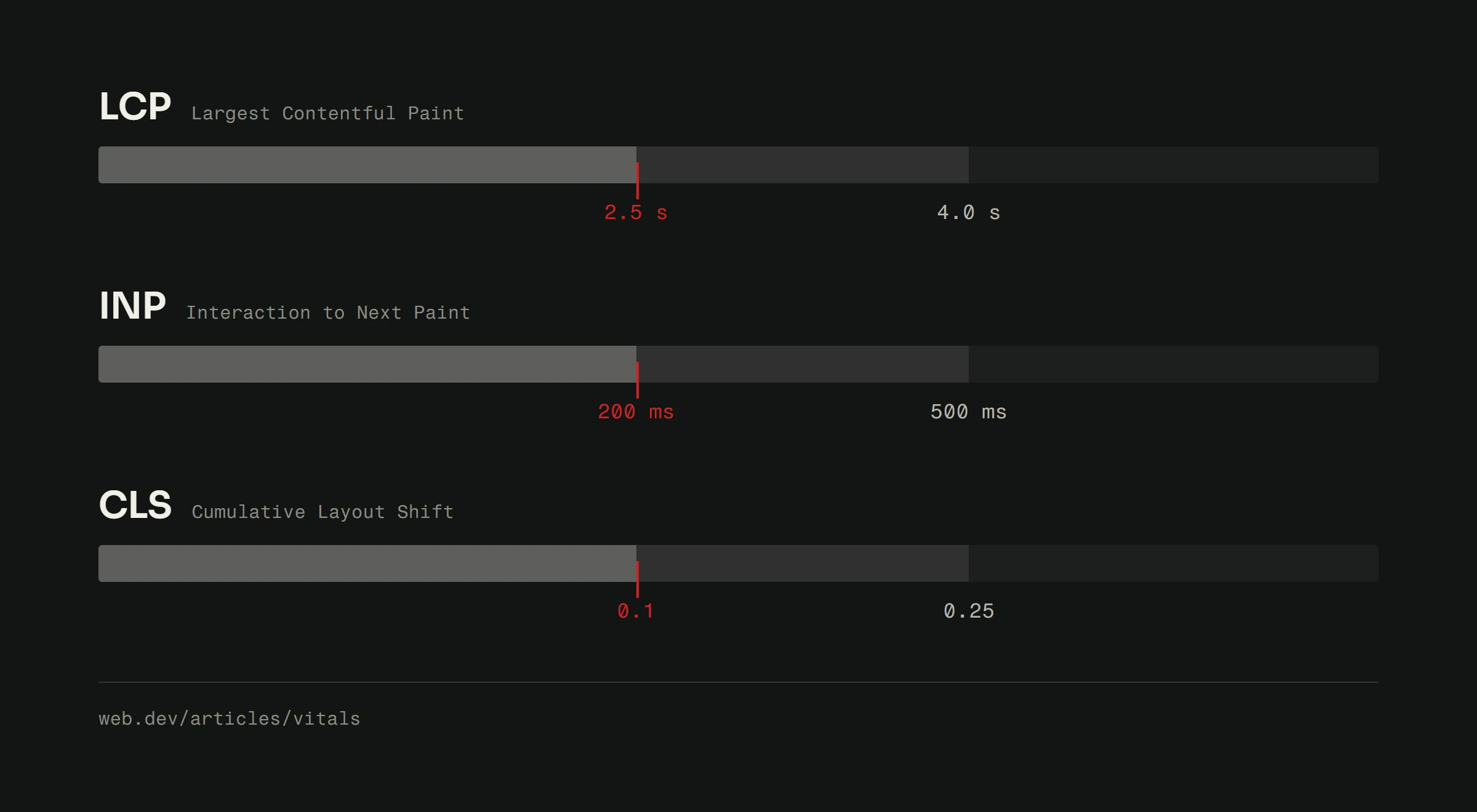
Google's Core Web Vitals now include Interaction to Next Paint (INP), which officially replaced First Input Delay in March 2024. INP measures how fast your page responds to any user interaction, not just the first one. This hits JavaScript-heavy sites hard.
Here's the practical checklist for site speed optimization:
- LCP (Largest Contentful Paint): Under 2.5 seconds. Optimize your hero images, preload critical assets, use a CDN.
- INP (Interaction to Next Paint): Under 200ms. Minimize JavaScript, break up long tasks, defer non-critical scripts.
- CLS (Cumulative Layout Shift): Under 0.1. Set explicit dimensions on images and ads. No layout surprises.
Test with PageSpeed Insights. Fix the red and orange items first. Then move to yellow.
Zero-click searches are growing
Roughly 60-70% of Google searches now end without a click to any website, with some 2025-2026 analyses pushing the estimate even higher. Featured snippets, knowledge panels, People Also Ask boxes, and AI Overviews all keep users on Google. On mobile, the zero-click rate is even steeper.
You can fight this trend or adapt to it.
Adapting means optimizing for featured snippets. Structure your content with clear H2/H3 headers. Answer questions directly in the first paragraph under each header. Use lists and tables where appropriate.
It also means building brand recognition. When people see your brand name in snippets repeatedly, they start searching for you directly. Direct brand searches are worth more than any keyword ranking.
Mobile performance is non-negotiable
Google uses mobile-first indexing. Your mobile site is your site. Period.
This isn't just about responsive design. It's about the mobile experience. Can users actually complete tasks on your mobile site? Is the text readable without zooming? Are buttons large enough to tap? Does the navigation work with one thumb?
Check Google Search Console's mobile usability report. Fix every issue. Then test on real devices, not just browser simulators.
The trends you can safely ignore
Not every shiny object deserves your attention. Here's what we'd skip:
- Voice search optimization as a separate strategy. If you're writing clear, natural content that answers questions directly, you're already optimized for voice search.
- Blockchain-based SEO. It's not a thing.
- Chasing algorithm updates. If your content is genuinely useful and your technical SEO is solid, individual updates won't wreck you.
- Social media signals as a ranking factor. Social doesn't directly affect rankings. It can drive traffic that leads to links, but that's an indirect effect.
What actually works
After all the trend talk, here's the honest truth. The sites that consistently rank well do these things:
They publish content that genuinely helps their audience. They build it on a technically sound foundation. They earn quality backlinks from relevant sites. They keep their Google Business Profile updated. They measure what works and do more of it.
No secret hack. No magic trend. Just consistent, quality work over time.
The best SEO strategy is the one you actually execute. Pick the trends that match your resources and your audience. Ignore the rest.
Need help figuring out which SEO priorities will actually move the needle for your business? Let's talk strategy.